


Table of Contents
- What Makes a Pool Float Premium, and Where to Buy Them
- Premium Pool Floats Worth Buying: Comparison Table
- Best Alternatives to Traditional Pool Noodles
- Luxury Pool Float Maintenance Tips
- How to Store Inflatable Pool Toys
- Safety and Sustainability: What to Know Before You Buy
- Frequently Asked Questions
Last Updated: September 18, 2026
What Makes a Pool Float Premium, and Where to Buy Them
Premium pool floats are built from thicker vinyl, reinforced seams, and UV-resistant materials that hold up season after season, rather than for a single summer. That construction difference is exactly why where to buy premium pool floats matters as much as which float you choose.
This guide from RippleWave covers what separates a float that lasts multiple summers from one that springs a leak in July.
A common mistake is judging a float by its photo. Weight capacity, valve count, and material thickness decide how it performs. The EU Product Safety Directive guidance on toy safety sets the baseline every inflatable sold in the EU must meet, which is a useful starting filter.
Material and Construction: What You're Actually Paying For
Heavy-duty vinyl is the core of a premium float. Thickness matters more than appearance.
Look for multi-chamber construction, welded rather than glued seams, and a UV-resistant coating that slows sun damage. Puncture resistance comes from material thickness, not from marketing labels.
Inflatable vs. Non-Inflatable: Which Suits Your Pool
Inflatable floats win on portability and storage. A deflated float folds into a bag and disappears into a cupboard, which matters if your pool is only used in summer.
Fabric-covered and foam-core floats offer better ergonomic support and buoyancy, and they never need inflating. The trade-off is bulk: they take up real space and cost more.
If you want a luxury pool aesthetic without inflating anything, a foam-core lounger is the better pick. If you want flexibility, inflatables win.
Premium Pool Floats Worth Buying: Comparison Table
RippleWave stocks a focused range rather than a hundred near-identical options. Here's how the categories compare.
| Product | Price | Best For | Key Detail |
|---|---|---|---|
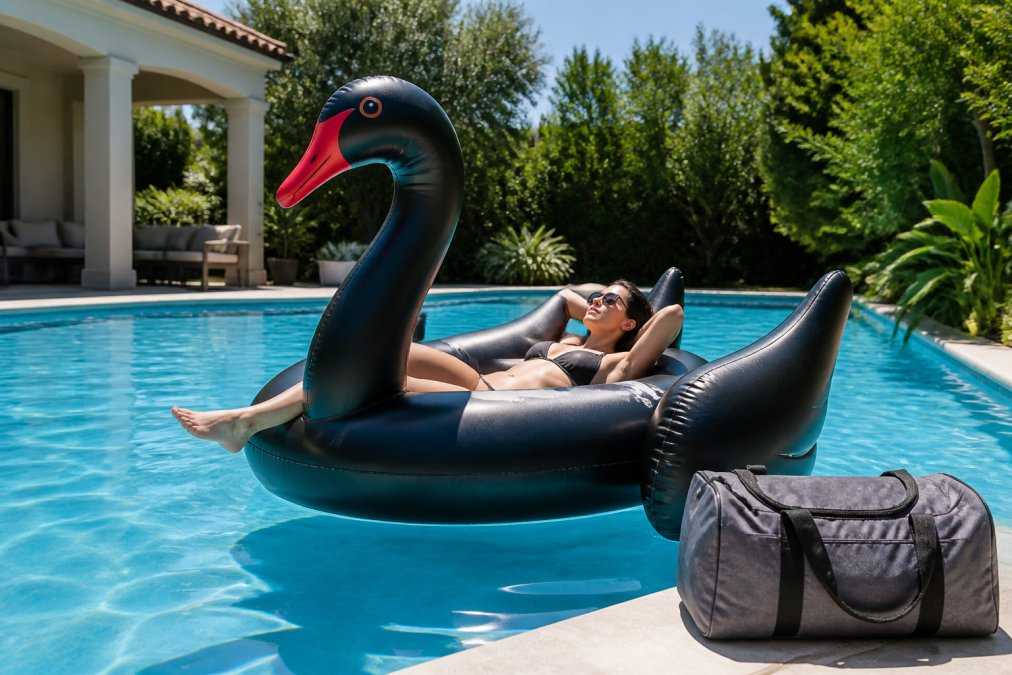
| Giant Black Swan Float | €75.99 | Adults, couples | 190 x 170 cm, multi-chamber, two grip handles |
| Inflatable Canoe with Paddle | €50.00 | Kids and adults | 176 lb capacity, tear-resistant PVC, folds flat |
| Baby Float with Sunshade | €19.99 | Ages 3-36 months | Sunshade, supervised shallow-water use |
| Floating Mahjong Table 31.5" | €245.00 | Adult game nights | 5 cm EVA foam, built-in tile slots and cup holders |
| Foldable Mahjong Table 33.5" | €79.99 | Pool parties | Folds flat, no pump needed, multi-purpose tray |
| Octagonal Game Table with Cards | €42.00 | Hot tubs, parties | Thick PVC, waterproof cards included |
| Unicorn Ring Toss Set | €26.99 | Family play | 80 x 37 cm, includes rings, bean bags, pump |
The black swan is the one to buy if you want a genuine pool lounger rather than a toy. It fits two adults or several kids, and the multi-chamber design means one puncture doesn't sink the whole float.

For game-focused buyers, the octagonal table at €42 is the value pick. The 31.5" mahjong table is the premium option, and it shows: 5 cm of EVA foam holds a wide, stable surface for four players.
Best Alternatives to Traditional Pool Noodles
Pool noodles are cheap, they tear, and they blow away. Better alternatives exist at nearly every price point.
The inflatable canoe replaces the noodle for kids who want to sit and paddle rather than cling. It holds up to 80 kg and rolls up for storage.

For adults, the black swan float does what a noodle can't: full-body ergonomic support with a cushioned headrest area and stable buoyancy.
Floating game tables are the third category. They keep drinks, cards, and snacks out of the water, which no noodle ever managed.
- Canoe set (€50): active play for kids and adults
- Black swan (€75.99): lounging and tanning
- Octagonal table (€42): social gatherings
- Unicorn ring toss (€26.99): younger children, group games
Each one lasts longer than a foam noodle, which is the real argument against the cheap option.
Luxury Pool Float Maintenance Tips
A premium float lasts longer if you treat it properly.
Rinsing, Drying and Storing for Longevity
Rinse every float with fresh water after each use.
Use mild soap and a soft brush for stubborn marks. Skip harsh chemicals.
Dry the float completely before storing.
Repairing Punctures and Seam Leaks
Small punctures are repairable with a vinyl patch kit.
Clean and dry the area first. Apply the patch, press firmly, and let it cure for the full time on the instructions before inflating.
How to Store Inflatable Pool Toys
Storage is where some premium floats are lost.
Why storage damages floats
Heat expands trapped air. A float stored fully inflated in a hot garage or shed can stress seams until they split. This is why the advice to store floats slightly deflated exists, it gives the air room to expand without loading the seams.
UV breaks down the plasticiser in PVC and vinyl. Over months of direct sun, the material loses flexibility and becomes brittle. A float that was supple in July can crack along a fold line by the following May.
Creasing is the slow killer.
The storage routine that works
- Rinse with fresh water after the final use of the season. Chlorine, salt, and sunscreen residue all degrade vinyl.
- Dry completely, inside and out. Trapped moisture in the seams is what grows mould, and mould damage is permanent.
- Deflate to about 80%, not fully flat. This keeps the material from creasing hard while leaving room for air expansion.
- Fold loosely, changing the fold lines each year so no single crease becomes the weak point.
- Store in a breathable bag, not a sealed plastic bin. A sealed bin traps any residual moisture against the vinyl.
- Keep it cool, dark, and off concrete. Concrete wicks moisture and stays cold; a hot surface stresses seams.
- Check once mid-winter. Inflate briefly, look for obvious damage, then re-store. Catching a seam split in January is cheaper than discovering it in June.
What to do with a float at end of life
This is the part most buying guides skip.
A PVC or vinyl float is not accepted in standard plastic recycling in most municipal schemes. The practical outcomes are:
- Repair first. A vinyl patch kit costs a fraction of a new float and keeps a repairable float out of waste. Most punctures and small seam splits are fixable.
- Check your local collection point. Some municipal waste centres accept large inflatables as bulky plastic waste rather than mixed refuse. Rules vary by region, so check before you bin it.
- Reuse before disposal. A punctured float that no longer holds air can still serve as a pool cover weight, a garden cushion filler, or a protective wrap for stored items.
- Buy once, keep it longer. The single most effective sustainability move is extending the life of the float you already own. A float that lasts five seasons replaces five cheap inflatables, and the material saving is real.
A note on packaging and disposal
When you do replace a float, look at how it ships. Fully recyclable and biodegradable packaging keeps the cardboard and paper stream clean, and it is a reasonable signal that the seller has thought about end-of-life. The float itself is the harder problem, and repair remains the best answer.
Safety and Sustainability: What to Know Before You Buy
Pool inflatables are toys, not life-saving devices. That distinction matters, and it should shape what you buy.
Frequently Asked Questions
What makes a pool float 'premium' compared to standard inflatables?
Premium pool floats use thicker, heavy-duty vinyl with UV-resistant coatings and reinforced seams, so they hold air longer and resist punctures. The upfront cost is higher, but a premium float typically lasts several seasons instead of one.
Are there eco-friendly options for luxury pool floats?
Yes. Some retailers, including RippleWave, ship in fully recyclable and biodegradable boxes and cover EU import duties, so there are no surprise charges. When choosing a float, plan to repair rather than replace. At the end of its life, check with your local jäteasema (waste station) for guidance on disposing of large plastic items responsibly, rather than leaving them at the poolside.
How do I choose the right size pool float for my pool?
Measure your pool's clear width and length first. A giant float like the 190 x 170 cm black swan needs a pool at least 3 x 3 metres to turn freely. For smaller pools, a 127 x 35 cm inflatable canoe or a 80 x 37 cm ring toss set works better. Also check weight capacity: the canoe supports up to 80 kg, while larger loungers handle two adults.
What materials are best for long-lasting pool floats?
Heavy-duty vinyl (PVC) with UV-resistant treatment is the most common choice for premium floats, as it resists sun damage and punctures. EVA foam is used for floating game tables. Whichever material you pick, rinse with fresh water after every use and store out of direct sunlight to extend its life.
Buying premium pool floats is really a decision about how many summers you want from them. Cheap inflatables cost less today and more by August. RippleWave stocks durable, family-friendly designs with fast tracked delivery, no EU import duties, and recyclable packaging, from the €75.99 black swan lounger to the €19.99 baby float. Get started with RippleWave and turn an ordinary pool day into one the whole family remembers.


