


Table of Contents
- Why Eco-Friendly Pool Party Supplies Matter
- How Long Do Biodegradable Pool Toys Last
- Compostability vs. Recyclability: What Actually Happens to Your Supplies
- Sustainable Pool Party Decorations That Work
- Biodegradable Party Plates and Cutlery for Poolside Dining
- Material Safety and What BPA-Free Really Means
- Building Your Eco-Conscious Party Planning Checklist
- Frequently Asked Questions
Last Updated: October 4, 2026
Why Eco-Friendly Pool Party Supplies Matter
Choosing eco-friendly pool party supplies aligns your spending with your values. Every inflatable toy, plate, and decoration either adds to landfill waste or breaks down naturally, and the difference matters.
A typical disposable pool party generates significant waste: single-use plates, plastic cups, synthetic decorations that shed microplastics, and inflatable toys discarded within weeks.
Premium, durable products often cost less over time than constantly replacing cheap alternatives. A reusable decoration lasts years; a biodegradable plate breaks down in weeks rather than centuries.
How Long Do Biodegradable Pool Toys Last
Biodegradable pool toys typically last one to three seasons, depending on material composition, environmental exposure, and manufacturing quality.
Material Composition and Degradation Rates
PLA (polylactic acid), derived from corn starch, degrades within 6-12 months of intense use. PBAT (polybutylene adipate terephthalate) resists UV damage better and lasts 18-24 months. Natural rubber and latex inflatables can last 2-3 seasons with proper storage away from direct sunlight.
Biodegradable materials break down through UV exposure, temperature fluctuations, and microbial action. Toys in direct sunlight degrade faster than stored ones; saltwater exposure differs from chlorinated pools.
Seam Construction and Structural Integrity
A toy's lifespan is often determined by seams before material fails. Flat-seam construction with overlapping edges provides better durability than welded seams. High-quality inflatables use reinforced seams with multiple stitch lines; lower-cost options use single-stitch welding that fails within weeks.
Check product descriptions for seam specifications. If the manufacturer doesn't mention seam type, assume it's lower-grade.
UV Resistance and Chlorine Compatibility
Some plant-based plastics become brittle with chlorine exposure; others crack from UV damage. Some biodegradable toys include UV stabilizers and chlorine-resistant coatings that extend lifespan without compromising compostability.
Storage and Maintenance Impact
Proper storage significantly affects lifespan. Toys in direct sunlight degrade 30-50% faster than shaded storage. Deflating toys and rinsing with fresh water after saltwater use extends lifespan.
A toy lasting one season with poor storage might last two with proper care. This maintenance factor represents real value.
Compostability vs. Recyclability: What Actually Happens to Your Supplies
Compostable and recyclable materials describe completely different end-of-life processes.
Recyclable means the material is collected, sorted, melted, and reformed into new items. Most recyclable pool supplies become secondary-use plastics: park benches, playground equipment, or lower-grade products.
Compostable means the material breaks down into natural elements within 90-180 days in industrial composting conditions. It requires facilities with precise temperature and moisture control. Many regions lack these facilities, so compostable items often end up in landfills, decomposing slowly.
Recyclable materials have established collection systems in most areas. Compostable materials require industrial facilities that may not exist locally.
For pool party tableware, compostable plates and cutlery are often a good choice because they're designed for single use. Recyclable options work better for items you'll reuse multiple times, storage containers, serving utensils, or durable decorations.
Sustainable Pool Party Decorations That Work
Sustainable pool party decorations fall into two categories: reusable items you'll use for years, and biodegradable items designed for single events. The best approach combines both, but success requires understanding material durability and having a plan for what happens after the party ends.
Reusable Decorations: Investment Pieces
Reusable decorations include bunting from natural fabrics (cotton, linen, jute) and durable photo backdrops. A quality fabric bunting lasts five to ten years; plastic bunting sheds microfibers and ends up in landfills after one use.
Select natural fiber construction and UV-resistant dyes. Natural dyes are safer for aquatic environments than synthetic dyes. Wooden or bamboo serving tables outlast plastic alternatives.
Biodegradable Decorations: Single-Event Touches
Biodegradable decorations include paper streamers, natural fiber garland (raffia, sisal, dried palm leaves), and plant-based centerpieces. They break down naturally within weeks to months.
Paper streamers are fully compostable. Natural fiber garland breaks down within 3-6 months. Live plant centerpieces can be replanted or composted if damaged.
DIY Upcycled Decorations: Reuse What You Already Have
Consider upcycling what you already own:
- Glass jars and bottles become luminarias or drink dispensers. Paint them with non-toxic, water-based paint or wrap them with natural twine for a rustic look.
- Old fabric scraps (cotton sheets, t-shirts, tablecloths) can be cut into strips and tied to create garland or bunting. Dye them with natural dyes (tea, beet juice, turmeric) for color variation.
- Driftwood or fallen branches collected from nature become table centerpieces, photo booth frames, or decorative borders. No tools required, arrange them as-is for a natural aesthetic.
- Plastic storage containers can be transformed into planters by drilling drainage holes and filling with potting soil and flowers. Paint them with outdoor-grade paint for a cohesive look.
- Old pool noodles (from previous seasons) can be cut and arranged into geometric wall art or painted and repurposed as plant stakes.
Upcycled pieces can eliminate waste.
Material Transparency and Water Safety
Verify material safety for decorations near pool water. Natural, water-based paints and non-toxic dyes are safer than synthetic alternatives. Avoid loose glitter, metallic coatings, or plastic embellishments that shed into the pool.
Choose items that won't absorb water and breed mold. Sealed wood, ceramic, glass, and live plants are safer than untreated paper or cardboard.
Setup Strategy: Mixing Reusable and Biodegradable
An effective approach combines durable reusable items with biodegradable single-use touches. Using reusable fabric bunting as a main visual anchor, then adding biodegradable paper streamers, natural fiber garland, and fresh plant centerpieces for seasonal variety can help minimize waste.
For a tropical-themed party, pair reusable tiki torches (if you have them) with fresh palm fronds, dried coconut husks, and potted orchids. For a garden party, use your permanent bunting with fresh-cut flowers in glass jars and paper napkins. For a casual summer gathering, combine reusable tablecloths with upcycled centerpieces and biodegradable streamers.
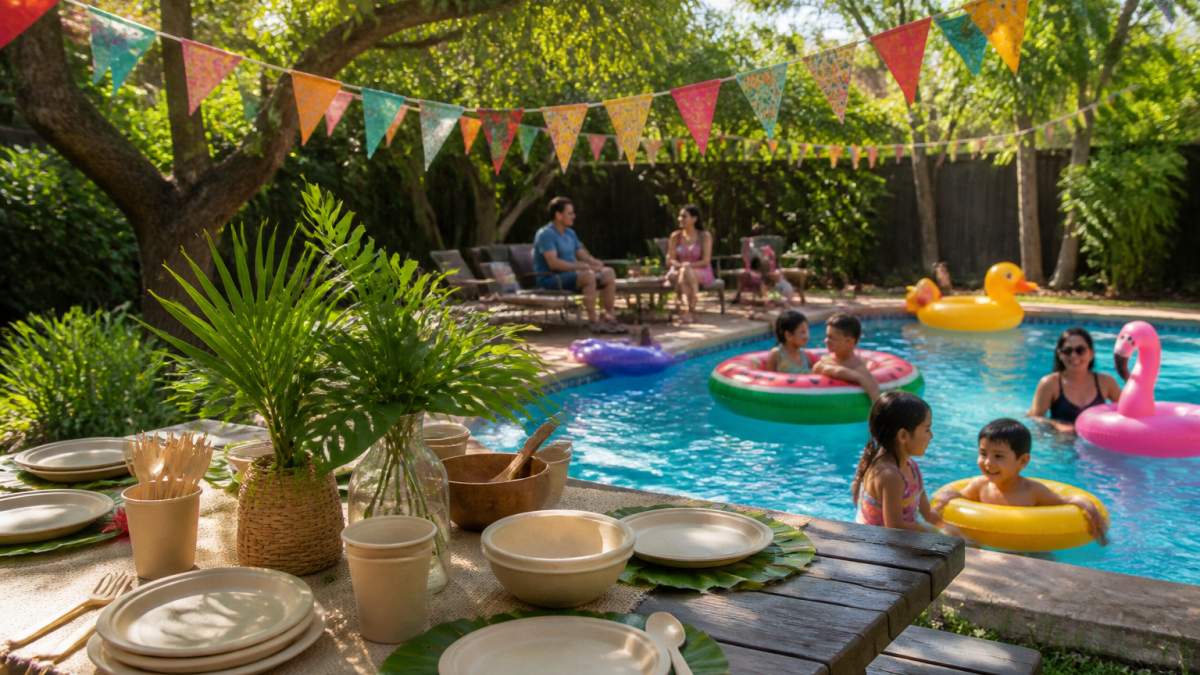
Biodegradable Party Plates and Cutlery for Poolside Dining
Poolside dining requires plates and utensils that withstand water, food oils, and casual handling. Biodegradable options are available.
Biodegradable plates made from sugarcane fiber (bagasse) are sturdy for hot and cold foods and resist grease. Cutlery is typically wood or plant-based plastic, compostable and food-safe.
These items can break down within weeks in industrial composting, with less environmental impact.
Biodegradable plates and cutlery may cost slightly more per unit.
One important detail: biodegradable cutlery isn't as durable as plastic for reuse. If you're planning to wash and reuse, standard stainless steel is a good choice. Biodegradable options make sense when you're genuinely using disposable items.
| Item | Biodegradable Material | Compostability | Best For |
|---|---|---|---|
| Plates | Bagasse (sugarcane fiber) | Industrial compost | Hot and cold foods |
| Forks/Spoons | Plant-based plastic or wood | Industrial compost | Single-use events |
| Cups | Corn-based PLA | Industrial compost | Beverages only |
| Napkins | Unbleached paper | Home or industrial compost | Cleanup and spills |
Material Safety and What BPA-Free Really Means
Understanding what BPA-free means can help you make informed choices.
BPA (Bisphenol A) is a chemical used in some plastics to make them clear and durable. It can leach into food and water, especially when heated. BPA-free means the product doesn't contain this specific chemical. That's the only guarantee the label provides.
BPA-free doesn't mean the product is made from safe, eco-friendly materials. It simply means one problematic chemical has been removed. The product might still be made from synthetic plastics that don't biodegrade, or from alternative chemicals that haven't been tested as thoroughly as BPA.
For pool toys and party supplies, BPA-free is a minimum standard. Look beyond the label for additional information: Is the material recyclable or compostable? Are the manufacturing practices documented? Does the product shed microplastics into the water?
Food-grade materials are another common claim. Food-grade means the item has been tested and approved for contact with food. It doesn't mean the material is sustainable or eco-friendly. A food-grade plastic plate is still plastic.
Transparent manufacturers publish material composition and end-of-life information. They explain what happens to the product when you're done with it.
Building Your Eco-Conscious Party Planning Checklist
Planning an eco-friendly pool party requires intentional choices at each stage. This checklist can help you make decisions that align with your values.
Before the Party:
- Choose a date and guest count (determines quantity of supplies needed)
- Decide which items will be reused vs. single-use
- Check local composting facilities for biodegradable waste
- Select durable inflatables designed to last multiple seasons
- Source decorations from reusable or biodegradable options
- Plan menu around foods that work with biodegradable plates
- Order supplies with enough lead time for delivery
During the Party:
- Use reusable serving utensils instead of disposable ones
- Provide clearly marked bins for compost and recycling
- Minimize single-use items by using cloth napkins where practical
- Keep inflatables away from sharp objects to extend lifespan
- Monitor water quality without using excessive chemicals
After the Party:
- Clean and properly store reusable items
- Separate compostable and recyclable materials
- Inspect inflatables for damage and repair if needed
- Document what worked and what didn't for next time
This checklist is about making deliberate choices that can reduce waste.
Planning an eco-friendly pool party means choosing supplies that deliver fun. RippleWave offers a selection of durable, sustainable inflatables and party products. Our fast delivery options with tracking ensure your supplies arrive on time, and our fully recyclable shipping boxes mean even the packaging aligns with your values. Explore our selection of biodegradable tableware, reusable decorations, and premium pool toys designed for families who care about both quality and the planet.
Frequently Asked Questions
How long do biodegradable pool toys actually last before breaking down?
Biodegradable pool toys typically last one to three seasons of regular use before materials begin to degrade, depending on UV exposure, water chemistry, and storage conditions. High-quality biodegradable inflatables designed for pools can withstand an entire summer if stored indoors during winter. Durability depends on the specific material, some plant-based polymers hold up better than others. Check the manufacturer's specifications and store toys away from direct sunlight when not in use to extend their lifespan.
What's the difference between compostable and recyclable pool party supplies?
Compostable items break down into natural matter in industrial composting facilities, typically within 90-180 days, and can be processed with food waste. Recyclable supplies are collected and remanufactured into new products through standard waste streams. Compostable biodegradable party plates can be used for food waste, while recyclable decorations and tableware suit items that won't contact food. Most eco-conscious parties use both: compostable plates for dining and recyclable reusable items for decorations.
Are eco-friendly pool party supplies actually worth the extra cost?
The value depends on your priorities and party frequency. Reusable supplies, like washable tablecloths, durable bamboo cutlery, and high-quality biodegradable inflatables, cost more upfront but reduce waste and last multiple seasons. Biodegradable single-use items cost slightly more than plastic but can eliminate landfill waste. If you host regular summer gatherings, reusable options can be a good choice. For one-time parties, compostable tableware is a sustainable choice.
What should I look for to verify a product is truly eco-friendly and safe for kids?
Check for BPA-free certification, non-toxic materials, and food-grade labeling if items contact food. Look for third-party certifications like compostability standards (EN 13432) or recyclability labels. Avoid products with misleading 'eco' claims, genuine sustainable items specify material type, degradation timeframe, and disposal method. For inflatables, confirm they're made from PVC alternatives or certified biodegradable polymers. Purchase from authorized retailers.


