


Table of Contents
- How to Store Inflatable Pool Toys: Preparation and Planning
- How to Clean Pool Inflatables Before Storage
- Deflating vs. Inflating: Which Is Best for Storage
- Best Pool Toy Storage Ideas and Solutions
- Choosing the Right Storage Location
- Winterizing Inflatable Pool Toys for Off-Season Storage
- Maintenance and Repair During Storage
- Frequently Asked Questions
Last Updated: October 1, 2026
How to Store Inflatable Pool Toys: Preparation and Planning
Storing inflatable pool toys properly keeps them in great condition for years. Most people just toss them in a corner or leave them outside, then wonder why they crack and leak after one season. The real difference between toys that last and ones that fail comes down to how you prepare and store them.
Plan your storage before the season ends: decide location, duration, and expected conditions, as summer-to-winter storage differs from year-round garage storage.
Gather supplies: soft cloth, mild soap, towels, storage containers, and access to a cool, dry location. Store inflatable pool toys when completely dry and weather is mild, avoid first frost or peak summer heat.
How to Clean Pool Inflatables Before Storage
Always clean inflatables before storage; dirt, algae, and chlorine damage vinyl and promote mold growth.
Removing dirt and algae buildup
Rinse with soft cloth, mild soap, and cool water, paying attention to seams. For stubborn algae, let soapy water sit briefly before scrubbing. Never use harsh chemicals or abrasive scrubbers. Rinse thoroughly and check for damage while cleaning.
Drying thoroughly to prevent mold
Dry completely to prevent mold: use towels to remove surface water, air-dry in shade for 24 hours, ensure all creases are dry, and open air valves slightly for interior circulation. Never store wet or damp items.
Deflating vs. Inflating: Which Is Best for Storage
Choose deflation or inflation based on storage duration, material type, and available space; treating all inflatables identically causes premature failure.
Material-specific deflation guidelines
Heavy-duty vinyl (0.3-0.5 mm) should be fully deflated for storage over two weeks; deflate slowly over 10-15 minutes and store at 10-15°C. Thin plastic (under 0.2 mm) can remain 50-70% inflated for up to four weeks but should be fully deflated for longer storage. Reinforced seam inflatables tolerate full inflation better; check manufacturer labels for specific guidance.
Deflation best practices
Deflate slowly by opening the valve gradually over several minutes; never force air out. Leave the valve slightly open during storage to equalize pressure and prevent moisture trapping. Store removable valve caps separately in a labeled bag.
When to keep toys partially inflated
Partial inflation (40-60%) works only for short-term storage (two to four weeks) with stable temperature (15-22°C), indoor placement away from sunlight, and no heavy stacking. Vinyl seams experience constant micro-stress, leading to slow leaks over time.
Long-term storage: always deflate
For off-season storage (three months or longer), fully deflate to prevent seam weakening and valve leaks from temperature-induced expansion. Fold loosely without sharp creases and store in breathable containers, never airtight bags.
Best Pool Toy Storage Ideas and Solutions
Choose storage solutions based on space, climate, and toy quantity. The key challenges are maximizing space and protecting against pests.
Space-saving folding and packing techniques
Proper folding reduces volume by 40-60%. Ensure toys are fully deflated and dry, fold lengthwise twice, then roll tightly without sharp creases.
Group similar-sized items, place heavier items on bottom, fill gaps with smaller inflatables, use clear bins, and label by type. Avoid stacking heavy objects on toys, sharp creases, damp packing, and compression bags.
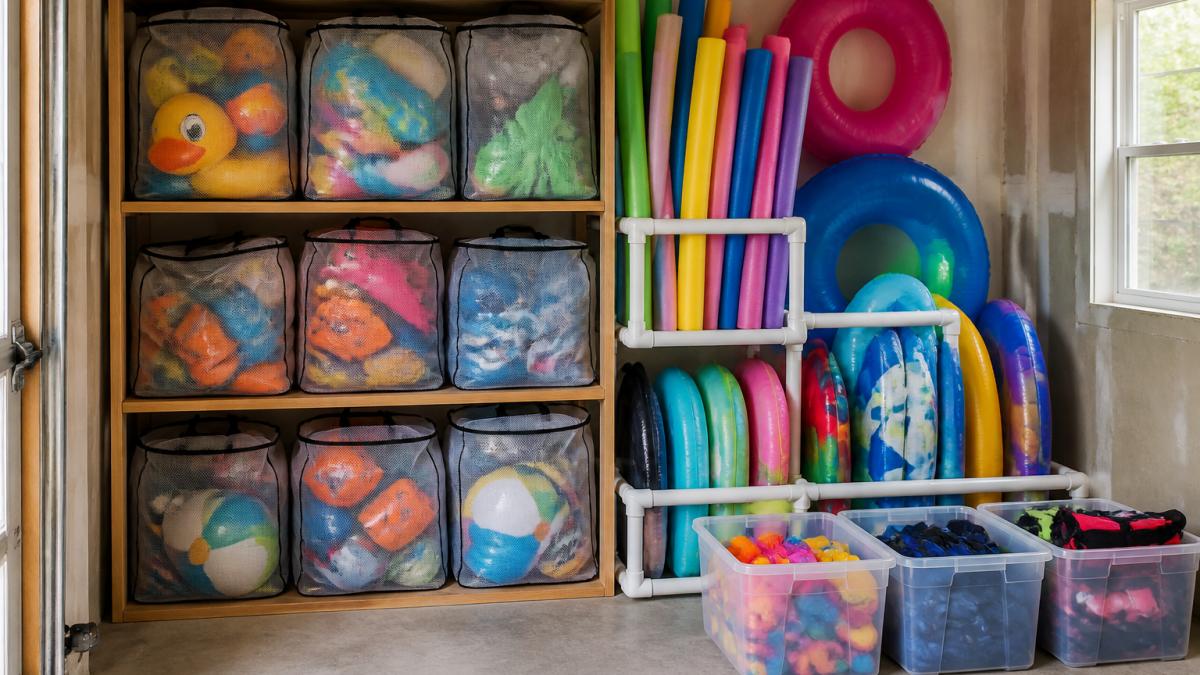
DIY storage solutions: PVC racks and mesh bags
DIY storage is affordable and surprisingly effective. Many people build simple solutions that work better than commercial options.
PVC pipe racks (€20-40, holds 8-12 floats) mount on walls for vertical storage. Mesh bags allow air circulation and visibility. Other options: ventilated plastic bins, pegboard systems, hanging organizers, or elevated wooden pallets.
Commercial storage organizers and containers
If you prefer ready-made solutions, many commercial options exist. Pool storage organizers range from simple to elaborate.
Look for containers that offer:
- Breathable mesh or ventilated designs (not airtight)
- Sturdy handles for easy transport
- Stackable construction to save space
- Moisture-resistant materials (polypropylene or treated fabric)
- Dimensions that fit your storage area (measure before purchasing)
Some people use under-bed storage containers designed for seasonal items. These work well if your storage area stays dry.
Whatever you choose, avoid airtight containers. They trap moisture and promote mold growth. Breathability matters more than perfect sealing.
Pest and rodent prevention in storage
Outdoor and garage storage attracts rodents and insects. Mice nest inside inflatables, and insects can puncture vinyl. This is a critical gap most guides ignore.
Rodent-proof storage strategies:
- Store toys in sealed plastic bins with tight-fitting lids (rodents can chew through cardboard and thin plastic)
- Elevate storage containers on shelves or pallets at least 15 cm off the ground; rodents are less likely to climb to elevated storage
- Keep storage areas clean and free of food debris, which attracts pests
- Seal any gaps or holes in walls, doors, or windows larger than 6 mm; rodents can squeeze through surprisingly small openings
- Use electronic pest deterrents (ultrasonic or electromagnetic) in storage areas; they're effective and chemical-free
- Check stored toys monthly for droppings, gnaw marks, or nesting material
- Store toys away from walls; leave at least 30 cm clearance so you can inspect for pest activity
Insect prevention:
- Ensure toys are completely dry before storage; moisture attracts insects
- Do not store near standing water, damp areas, or wood piles
- Use cedar blocks or lavender sachets inside storage containers (natural repellents that don't damage vinyl)
- Avoid pesticide sprays near inflatables; chemicals can degrade vinyl
- Inspect toys for spider webs or insect nests before removing them from storage
Signs of pest damage to watch for:
- Small holes or punctures (rodent teeth marks are typically 2-3 mm diameter)
- Chewed seams or valve areas
- Droppings or nesting material inside or around toys
- Discoloration or staining from pest urine
If you discover pest damage, clean the affected area with mild soap and water, then apply a vinyl patch kit. Small holes can be repaired; extensive damage may require replacement.
Choosing the Right Storage Location
Location determines whether your toys survive storage in good condition. The wrong spot leads to UV damage, temperature extremes, pest problems, and mold.
Indoor vs. outdoor storage considerations
Indoor storage is almost always better. A garage, basement, or climate-controlled shed protects toys from weather extremes, UV exposure, and pests.
Indoor storage benefits:
- Stable temperature year-round
- Protection from rain and humidity fluctuations
- No direct sunlight damage
- Reduced pest and rodent risk
Outdoor storage requires serious protection. If indoor space isn't available, you can store toys outside, but they need shelter.
Never leave toys in direct sunlight. UV rays degrade vinyl quickly, causing cracks and brittleness.
Protecting from UV damage and direct sunlight
UV degradation is one of the biggest threats to inflatable pool toys during storage. Sunlight breaks down vinyl bonds, making the material weak and prone to cracking.
Protect toys from UV exposure:
- Store in a shaded location with no direct sunlight
- Use opaque storage containers or covers
- Keep toys away from windows
- Choose a north-facing wall if outdoor storage is necessary
If you must store outdoors, use a heavy-duty tarp or cover. Make sure the cover allows air circulation underneath to prevent moisture buildup.
Temperature matters too. Extreme heat and cold both damage vinyl. Ideally, store toys in a location that stays between 10°C and 25°C. Garages and basements usually provide this range naturally.
Winterizing Inflatable Pool Toys for Off-Season Storage
Winter storage requires extra attention. Cold temperatures, moisture, and pests create multiple threats to your toys during the off-season.
Preventing mold, mildew, and pest damage
Mold and mildew are the biggest winter storage problems. They thrive in cool, damp conditions, exactly what many storage areas provide.
Prevention steps:
- Ensure toys are completely dry before storage
- Use desiccant packets or silica gel to absorb moisture
- Place toys on shelves or pallets, not directly on concrete
- Leave space between stored items for air circulation
- Check storage area for water leaks or condensation
Pest and rodent prevention is equally important. Mice and insects can damage vinyl and nest inside inflatables.
Protect against pests:
- Seal storage containers completely when not accessing them
- Keep storage areas clean and free of food debris
- Use pest deterrents like traps or electronic repellents
- Check toys monthly for signs of pest damage
- Store in elevated locations when possible
Temperature control and moisture management
Consistent temperature keeps vinyl stable. Fluctuations between hot and cold cause expansion and contraction, which stresses seams and valves.
Moisture control is equally critical:
- Use a dehumidifier in damp storage areas
- Place moisture-absorbing packets inside storage containers
- Ensure adequate ventilation to prevent condensation
- Avoid storing near water heaters or pipes that sweat
- Keep storage area dry, address any water intrusion immediately
If your storage area tends to be damp, consider a small fan to improve air circulation.
Check on stored toys every few weeks. Look for signs of mold, moisture, or pest activity.
Maintenance and Repair During Storage
Your toys aren't dormant during storage, they still need occasional attention.
Inspect stored toys monthly:
- Look for cracks, tears, or discoloration
- Check air valves for leaks or corrosion
- Feel seams for separation or weakness
- Smell for mold or mildew odors
- Look for pest damage or droppings
Small tears can be repaired with vinyl patch kits. Most hardware stores carry inflatable repair supplies.
Test air valves by applying soapy water. Bubbles indicate a leak.
If you find mold, clean it immediately with diluted vinegar or a mild fungicide.
Storing inflatable pool toys properly means they'll be ready for action year after year. The effort you put in now, cleaning, drying, choosing the right location, pays dividends when you pull out toys that are still in perfect condition.
Frequently Asked Questions
What is the best way to store inflatable pool toys?
Clean and thoroughly dry your pool inflatables first, then deflate them completely to save space. Store them in a cool, dry location away from direct sunlight, a climate-controlled garage or pool shed is ideal. Use mesh storage bags or breathable containers to allow air circulation and prevent mold growth. Keep them away from sharp objects and store them flat or loosely rolled to avoid permanent creases. Check periodically during storage for any signs of moisture or pest damage.
How do you prevent mold on inflatable pool toys during winter storage?
Mold prevention starts with thorough drying before storage. Towel-dry each toy completely, then air-dry in shade for at least 24 hours. Store in a temperature-controlled environment with low humidity, aim for 40-50% relative humidity if possible. Use mesh storage bags that allow airflow rather than sealed plastic containers. Place silica gel packets or moisture-absorbing products inside storage containers to control humidity. Inspect toys monthly during the off-season and ensure your storage area has good ventilation to prevent moisture buildup.
How long do inflatable toys last with proper care and storage?
High-quality vinyl inflatable pool toys can last multiple seasons when properly maintained and stored. The lifespan depends on material quality, UV exposure during use, and storage conditions. Durable materials and careful handling extend longevity significantly. Proper storage, keeping toys deflated, dry, and away from sunlight, prevents premature degradation. Regular inspection for small tears and prompt repair prevents larger damage. Many premium inflatables last 3-5 years or more when stored correctly, compared to just one season if left exposed or stored improperly.
Is it okay to leave pool toys in the pool?
Leaving inflatable pool toys in the pool year-round is not recommended. Continuous water exposure accelerates vinyl degradation and promotes mold growth inside the toys. Chemical exposure from pool treatment and UV damage from sunlight significantly reduce lifespan. Even in warm weather, remove toys after each use session, this prevents water from sitting inside and allows proper drying. Store them out of the pool when not in active use to maintain their condition and ensure they remain safe and durable for your family.


