


Table of Contents
- What You'll Need Before Starting
- Step-by-Step Cleaning Process for Inflatable Pool Toys
- Repairing Leaks in Inflatable Pool Toys
- Preventing Mold, Mildew, and Algae Growth
- Best Way to Store Pool Inflatables Off-Season
- Protecting Your Inflatables from Sunscreen, Oil, and UV Damage
- Common Maintenance Mistakes to Avoid
- Frequently Asked Questions
Last Updated: September 3, 2026
How to maintain inflatable pool toys is essential for extending their lifespan and keeping them safe for your family. Inflatable pool toys represent a significant investment in summer entertainment, yet many owners overlook the maintenance practices that determine whether these toys last one season or several.
This guide covers everything you need to know about caring for your inflatable pool toys, from daily cleaning to off-season storage and repair. Whether you're protecting a floating lounger, an inflatable ring, or a water game, the principles remain consistent: regular cleaning, prompt repairs, and smart storage prevent the common degradation that cuts toy life short.
What You'll Need Before Starting
Gathering the right supplies before you begin cleaning ensures you won't damage the vinyl or fabric during maintenance. A soft-bristled brush is your primary cleaning tool, hard-bristled brushes will scratch and weaken vinyl, creating tiny tears that become punctures.
Mild soap and fresh water form the foundation of most cleaning tasks. Dish soap diluted in water removes surface grime, sunscreen residue, and algae without degrading vinyl. For tougher stains, white vinegar cuts through mineral deposits and discoloration, while baking soda mixed with water creates a gentle paste for scrubbing stubborn marks.
For sanitizing, a diluted bleach solution works sparingly: mix one part household bleach with ten parts water and never apply bleach directly to vinyl.
A patch kit is essential for repairs and costs far less than replacing a toy. Storage bags protect inflatables during off-season months, and an air pump or deflation tool simplifies preparation for storage.
Step-by-Step Cleaning Process for Inflatable Pool Toys
The cleaning routine follows a logical sequence: remove debris, scrub with appropriate solutions, rinse thoroughly, and air-dry completely. Skipping any step invites mold, mildew, or material degradation.
Removing surface debris and grime
Begin by rinsing the toy with fresh water to remove loose debris, leaves, and surface dirt. This initial rinse prevents you from grinding dirt into the vinyl during scrubbing.
Inspect the toy for visible algae, sunscreen buildup, or oil residue. Sunscreen and body oils are particularly problematic because they degrade vinyl over time, making the surface tacky or sticky.
For light surface grime, a soft cloth or sponge with fresh water may be sufficient.
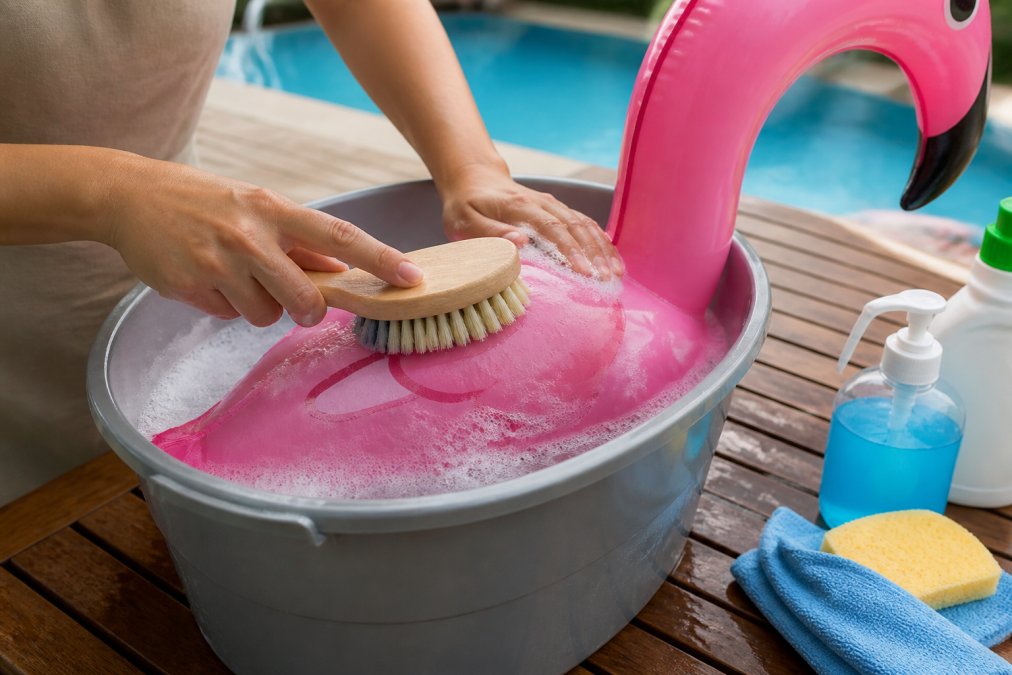
Scrubbing with appropriate cleaning solutions
Mix a bucket of warm water with a few drops of mild dish soap. Dip your soft-bristled brush into the soapy water and scrub the toy in circular motions, working from top to bottom.
Pay special attention to handles, seams, and textured surfaces where bacteria collects. Use moderate pressure; aggressive scrubbing wears vinyl prematurely.
For stubborn stains, make a paste of baking soda and water, apply it to the stained area, let it sit for 5-10 minutes, then scrub gently (the CDC). For mildew spots or algae growth, spray white vinegar directly on the affected area, let it sit briefly, then scrub and rinse.
For serious sanitizing, mix one part bleach with ten parts water (the EPA). Apply this solution with a cloth or soft brush, working quickly to avoid prolonged contact.
Rinsing and air-drying thoroughly
Rinse the toy thoroughly with fresh water until no soap, vinegar, or cleaning residue remains. Residual cleaning agents can leave a sticky film or damage the vinyl over time.
Pay particular attention to seams and valve areas where cleaning solution can become trapped and promote mold growth.
After rinsing, stand the toy upright or lay it flat in direct sunlight to air-dry. For toys with inflation valves, leave the valve open during drying to allow interior moisture to escape. Proper air-drying typically takes 24 hours for most toys.
Repairing Leaks in Inflatable Pool Toys
Even well-maintained inflatables eventually develop small leaks. Catching and repairing these promptly prevents toys from becoming unusable.
Identifying punctures and damage
The first sign of a leak is slow deflation. To locate the leak, inflate the toy fully and listen carefully for a hissing sound, paying special attention to seams and areas that contact rough surfaces.
If you can't hear the leak, use a soapy water test. Mix dish soap with water and apply it to the inflated toy with a sponge or spray bottle. Bubbles will form at the location of any leak. Mark the spot so you can find it again during repair.
Inspect the toy visually for obvious damage: cracks, punctures, worn spots, or areas where the vinyl appears thin or discolored.
Using a patch kit for vinyl repairs
Most vinyl repair kits include patches, adhesive, and instructions. First, clean the area around the puncture thoroughly with mild soap and water and allow it to dry completely.
Lightly sand the area around the puncture with fine sandpaper to roughen the surface and improve adhesion. Apply adhesive according to kit instructions, then press the patch firmly over the puncture, holding it in place for the time specified.
Allow the repair to cure fully before inflating the toy again, most patches require 24 hours of curing time. Test the repair by applying soapy water to the patched area. If bubbles appear, the patch didn't seal properly and requires reapplication.
Preventing Mold, Mildew, and Algae Growth
Mold and mildew thrive in damp, warm environments. Prevention is far easier than remediation.
The primary prevention strategy is complete drying before storage. Any moisture trapped in or on the toy will eventually support mold colonies. During the swimming season, allow toys to air-dry between uses in direct sunlight, which provides natural UV disinfection.
Store toys in dry locations. If you must store them indoors, use a dehumidifier or ensure good air circulation. Inspect toys periodically during storage for signs of mold or mildew and wipe away any early growth immediately with a cloth dampened in white vinegar or diluted bleach solution.
For toys stored for extended periods, consider placing silica gel packets or activated charcoal inside the storage container to absorb moisture.
Best Way to Store Pool Inflatables Off-Season
Proper off-season storage determines whether your inflatables emerge in spring ready for use or degraded and damaged.
Deflating and preparing for storage
Before storing, clean the toy thoroughly and allow it to dry completely. Deflate the toy slowly and completely using a gentle, steady deflation process. Inspect the toy one final time for damage or areas that need repair.
Using storage bags and keeping toys dry
Place the deflated toy in a storage bag or container. Heavy-duty storage bags designed for inflatables offer excellent protection, or use clean plastic bins with tight-fitting lids.
Store the container in a cool, dry location away from direct sunlight. Basements, closets, or climate-controlled storage spaces are ideal. Avoid hot attics or uninsulated sheds where temperature fluctuations and UV exposure degrade vinyl.
Keep toys away from sharp objects, heavy items, or anything that could puncture or crush them. Periodically check stored toys during the off-season to ensure no moisture has accumulated.
Protecting Your Inflatables from Sunscreen, Oil, and UV Damage
Sunscreen and body oils are among the most damaging substances that contact inflatable pool toys. These substances break down vinyl, causing discoloration, tackiness, and premature material failure.
Rinse toys immediately after use with fresh water to remove sunscreen residue before it dries and bonds to the vinyl. For toys with dried sunscreen, soak them in warm water for 10-15 minutes to soften the residue, then scrub gently with mild soap.
Body oils from skin contact also degrade vinyl over time. Regular cleaning with mild soap removes these oils before they cause permanent damage.
UV exposure causes vinyl to become brittle, discolored, and prone to cracking. Minimize damage by storing toys out of direct sunlight when not in use. Apply a vinyl protectant product designed for pool equipment if you want additional UV protection.
Avoid leaving toys inflated and sitting in direct sunlight for extended periods. When toys aren't being used, deflate them or store them in shade.
Common Maintenance Mistakes to Avoid
Understanding what not to do prevents costly damage and extends toy lifespan.
Using hard-bristled brushes or abrasive scrubbers is the most frequent mistake. Hard brushes scratch and weaken vinyl, creating micro-tears that become entry points for punctures and mold (peer-reviewed research). Always use soft-bristled brushes.
Storing toys while damp is another common error. Even slightly damp toys develop mold within days. Always ensure complete air-drying before storage.
Neglecting valve maintenance causes leaks because valves experience repeated stress from inflation and deflation. Inspect valves regularly and ensure they close completely.
Leaving toys inflated in direct sunlight for extended periods accelerates UV damage. Deflate toys when not in active use or store them in shade.
Using harsh chemicals, including undiluted bleach, acetone, or petroleum-based cleaners, damages vinyl irreparably. Always use mild, water-based cleaning solutions.
Ignoring early signs of mold or mildew allows these organisms to spread throughout the toy. Catch and treat mold growth immediately.
Failing to rinse thoroughly after cleaning leaves soap residue or chemical traces on the vinyl. These residues attract dirt, promote mold growth, and can degrade material over time.
Maintaining inflatable pool toys requires consistent attention, but the effort pays dividends in extended lifespan and reliable performance. Regular cleaning, prompt repairs, and smart storage practices transform toys that might otherwise last one season into durable equipment that serves your family for years.
RippleWave's premium inflatable pool toys are engineered for durability, but even the highest-quality toys benefit from proper maintenance. When you combine RippleWave's durable, family-friendly designs with the care practices outlined in this guide, you create ideal conditions for long-term enjoyment. Our authorized retailer status means every toy arrives ready to deliver seasons of fun, and with proper maintenance, they'll continue delivering memories long after purchase. Start with the cleaning routine this week, establish a storage habit for off-season months, and your investment in pool entertainment will reward you year after year.
Frequently Asked Questions
Q: How do I know if my inflatable pool toy has a leak?
A: Fill the toy with air and listen for hissing sounds, or apply a soap solution to the vinyl surface and watch for bubbles forming. Check seams, the inflation valve, and any creases carefully. Small leaks may only show after the toy sits inflated for several hours. Catch leaks early to prevent material degradation and extend the toy's lifespan.
Q: What's the best way to store pool inflatables during winter?
A: Fully deflate the toy, clean and dry it completely, then store in a cool, dry place away from direct sunlight. Use a dedicated storage bag to protect against dust and damage. Keep inflatables in a temperature-stable environment to prevent material brittleness. Proper storage prevents mold growth, UV damage, and keeps your toys ready for next season.
Q: Can I use bleach solution to clean inflatable pool toys?
A: Avoid harsh bleach on vinyl inflatables, as it can cause material degradation and discoloration. Instead, use mild soap and water, white vinegar, or baking soda solutions for effective sanitizing. These gentler options remove algae, mildew, and surface grime without damaging the vinyl. Always rinse thoroughly after cleaning and air-dry before storage.
Q: How often should I maintain and inspect my inflatable pool toys?
A: Inspect toys weekly during the season for signs of wear, punctures, or mold growth. Clean them every 1-2 weeks depending on pool usage and water quality. Check the inflation valve and seams monthly, and deflate toys immediately after use if storing them wet. Regular preventative maintenance catches small issues before they become costly repairs.
This article was written using GrandRanker


