


Table of Contents
- How to Choose Pool Toys: What Actually Matters
- Material Durability: Inflatable vs. Foam vs. Plastic
- Pool Toy Safety Standards and Supervision
- Best Alternatives to Traditional Pool Noodles
- How to Maintain Inflatable Pool Toys
- Top Pool Toys for Skill Development and Active Play
- Frequently Asked Questions
Last Updated: September 15, 2026
How to Choose Pool Toys: What Actually Matters
Choosing pool toys is the process of matching a toy's material, size, and safety profile to the swimmers, water, and storage you actually have at home. Get those three factors right and a toy lasts several seasons; get them wrong and you're replacing deflated vinyl every July. This guide walks through the decisions that matter most, from age-appropriate design to maintenance and repair.
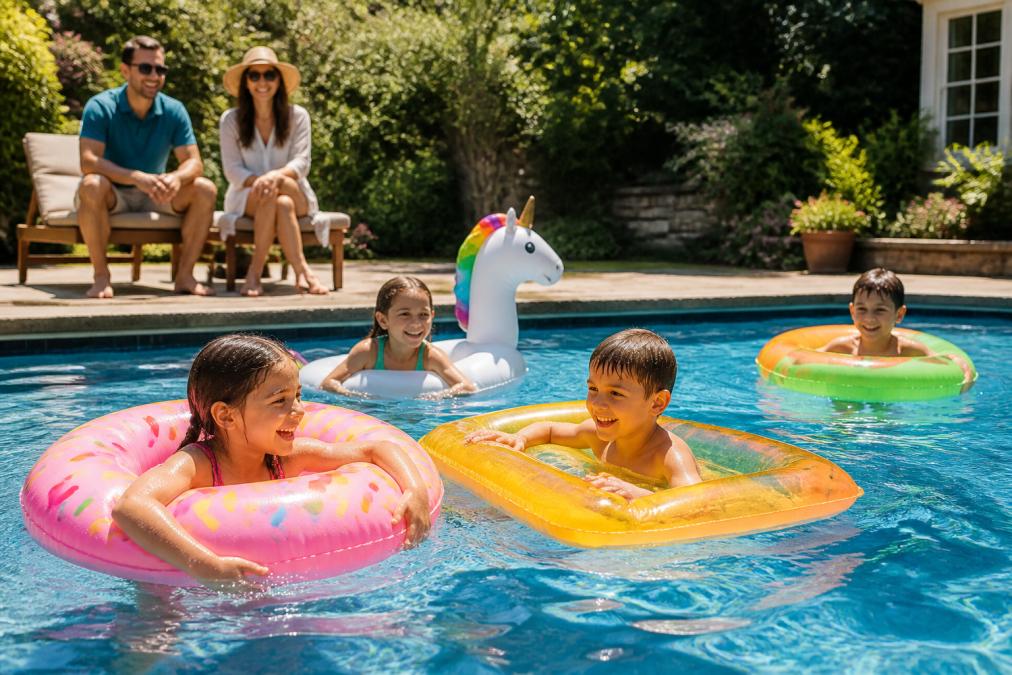
Most buyers start with price and end up disappointed. What most guides miss is that the failure point is rarely the toy itself; it's a mismatch between the toy's construction and how it gets used. A foam noodle left in chlorinated water for a month behaves differently than an inflatable ring tossed in for an afternoon. Understanding that distinction is the whole game.
Below, we break down the six decisions that separate a pool toy that survives the season from one that ends up in the bin by August.
Age-Appropriate Pool Toys for Every Swimmer
Age-appropriate pool toys are designed around a child's swimming proficiency, not just their birthday. A four-year-old with basic water confidence needs different buoyancy aids than an eight-year-old learning to dive. Look for toys that state a weight capacity and an age range, and treat those as minimums rather than targets.
For younger swimmers, prioritise buoyancy aids and soft foam shapes that stay close to the surface. For older kids, dive rings, toss games, and coordination-building toys keep them engaged and moving. A common mistake is buying one toy for a mixed-age group; in practice, families with a toddler and a school-age child usually need two categories of toy.
Pool Size, Space, and Water Depth
Pool size and water depth determine which toys are practical before you buy anything. A large floating basketball hoop needs open surface area and a deck to stand on; a small ring toss works in almost any pool. Measure your usable water surface, not the total pool footprint, and leave clearance for swimmers to move around the toy.

Depth matters for diving toys. Dive rings and sinking games need at least a metre of water to be fun and safe. In shallower water, stick to floating games and toss sets that stay on the surface. Vacation rental owners should favour toys that work across a range of depths, since guest pools vary.
| Pool Type | Best Toy Category | Avoid |
|---|---|---|
| Small plunge pool | Ring toss, floating toss games | Large volleyball nets |
| Family rectangular pool | Basketball hoops, volleyball nets, dive rings | Oversized single floats |
| Deep pool (1.5m+) | Dive rings, sinking games | Shallow-only toss sets |
| Rental property | Versatile 2-in-1 and 3-in-1 sets | Single-purpose toys |
Material Durability: Inflatable vs. Foam vs. Plastic
Material durability comes down to three trade-offs: inflatables pack down small but can puncture, foam is tough but degrades in sun, and rigid plastic lasts longest but takes up space. What separates a toy that survives multiple seasons from one that fails by August is usually the construction detail, not the material category itself.
Inflatable vinyl and PVC. The spec that matters most is gauge thickness. Lightweight toys sold as party novelties typically run thin, while pool-grade inflatables use noticeably heavier vinyl with welded, not glued, seams. Welded seams resist the slow leak that shows up at the seam after a few weeks of chlorinated exposure. UV-stabilised vinyl holds colour and flexibility longer than untreated PVC, which goes brittle and chalky under prolonged sun. Puncture resistance is the single most useful spec to check, followed by valve quality: a two-way valve that seals without a cap holds air far better than a simple pinch valve.
Foam. Closed-cell foam, the dense, non-absorbent type used in quality noodles and kickboards, resists waterlogging and punctures well. Open-cell foam soaks up water, gets heavy, and grows mould. The weakness of all foam is UV: prolonged direct sun makes it crumble and shed. Non-toxic materials matter most for toys that younger children mouth or handle constantly, so check that foam toys are labelled free of phthalates and heavy metals.
Rigid plastic. Moulded plastic toys, dive rings, sinking sticks, toss targets, last the longest because there is nothing to inflate and nothing to puncture. The trade-off is storage bulk and the risk of cracking if dropped on a hard deck in cold weather.
| Material | Typical lifespan | Main failure mode | Storage footprint |
|---|---|---|---|
| Thin vinyl inflatable | One season or less | Seam leak, valve failure | Very small |
| Pool-grade welded vinyl | Several seasons | Puncture, UV brittleness | Small |
| Closed-cell foam | Several seasons | UV crumbling, mould | Medium |
| Rigid moulded plastic | Several seasons | Cracking, fading | Large |
The sustainability angle most guides skip. Vinyl and PVC inflatables are difficult to recycle and often end up in general waste once they leak, which is why the cheapest toys carry the highest hidden environmental cost. Foam alternatives based on EVA or polyethylene are more recyclable, and a growing number of brands now offer PVC-free inflatables. The most effective sustainability move is not a greener material but a longer-lived one: a heavier welded toy that lasts longer replaces disposable ones. Pair that with a patch kit and the waste drops further.
Pool Toy Safety Standards and Supervision
Pool toy safety standards exist to make sure toys don't introduce hazards like entanglement, sharp edges, or misleading buoyancy claims. In the EU, toys sold for children carry a CE mark and must meet the Toy Safety Directive, which sets requirements for materials, small parts, and chemical safety. Check for that marking before anything else.
Supervision is not optional, whatever the toy claims. Pool safety supervision means an adult watching the water continuously, not glancing over from a deck chair.
Best Alternatives to Traditional Pool Noodles
How to Maintain Inflatable Pool Toys
Top Pool Toys for Skill Development and Active Play
Frequently Asked Questions
What are the best pool toys for 2026?
For 2026, look for inflatable games that combine multiple activities, such as basketball and ring toss sets. Durable vinyl construction with UV resistance is essential for lasting through the summer. Age-appropriate options for kids aged 4-8 and 8-12 are widely available, along with sensory-friendly designs. Prioritize toys with clear weight capacity limits and non-toxic materials that meet safety standards.
How do I ensure pool toys meet safety standards?
Check for CE marking and compliance with EU toy safety directives, which apply in Finland. Look for labels indicating non-toxic materials and age recommendations. Avoid toys with small parts for children under three. For inflatables, verify weight capacity and that valves are securely sealed. Always supervise children in and around water, regardless of the toy's safety certification.
How can I tell if a pool toy is durable?
Durable pool toys typically use thick, multi-layered vinyl or dense foam. Check the puncture resistance and seam quality. UV-resistant materials prevent fading and cracking from sun exposure. Chlorine-resistant finishes extend lifespan. Reviews mentioning longevity are helpful, but look for specific details like gauge thickness. Proper storage and maintenance also significantly impact how many seasons a toy will last.
Are there eco-friendly alternatives to traditional plastic pool toys?
Yes. Some brands now offer pool toys made from recycled plastics or biodegradable materials. Foam noodles made from plant-based foams are emerging. However, durability remains key: a well-made toy that lasts several summers is more sustainable than a cheap one replaced yearly. Look for recyclable packaging and avoid single-use inflatables. Repairing punctures with patch kits also reduces waste.
What are the best pool toys for different age groups?
For ages 3-5, choose small floats, soft balls, and shallow-water ring toss games. Ages 6-8 enjoy dive rings, floating basketball hoops, and beginner volleyball sets. Ages 9-12 can handle more competitive games like water volleyball and basketball with adjustable heights. Adults and teens often prefer loungers, floating game tables, and cornhole sets. Always match the toy to swimming proficiency and weight capacity.
How can I maintain inflatable pool toys to last longer?
Rinse inflatables with fresh water after each use to remove chlorine and salt. Dry them completely before storing in a cool, shaded area. Avoid leaving them in direct sun when not in use. Check inflation levels regularly; under-inflation stresses seams. Use a patch kit for minor punctures immediately. Store deflated and folded, away from sharp objects. Proper maintenance can double a toy's lifespan.
Choosing pool toys well means resisting the cheapest option and matching the toy to your swimmers, your water, and your storage. RippleWave stocks durable, family-friendly inflatables built for exactly that, backed by fast delivery with tracking, no EU import duties, and fully recyclable, biodegradable signature shipping boxes. Get started with RippleWave and turn an ordinary pool day into a game the whole family plays together.


