


Table of Contents
- What Makes Pool Toy Packaging Eco Friendly?
- The Real Environmental Impact of Plastic Toy Packaging
- Benefits of Plastic-Free Toy Packaging for Your Family
- How Long Do Biodegradable Pool Toys Last?
- Spotting Greenwashing: A Checklist for Eco Conscious Parents
- A Parent's Guide to Disposing of Pool Toy Packaging
- Choose Brands That Prioritize the Planet
- Conclusion
- Frequently Asked Questions
Last Updated: September 9, 2026
What Makes Pool Toy Packaging Eco Friendly?
Eco friendly pool toy packaging benefits start with the materials themselves. Packaging earns the "eco friendly" label when it uses recycled content, renewable resources, or materials designed for composting rather than landfill (the EPA). For pool toys specifically, this means avoiding the layers of virgin plastic shrink-wrap and polystyrene that typically encase inflatables.
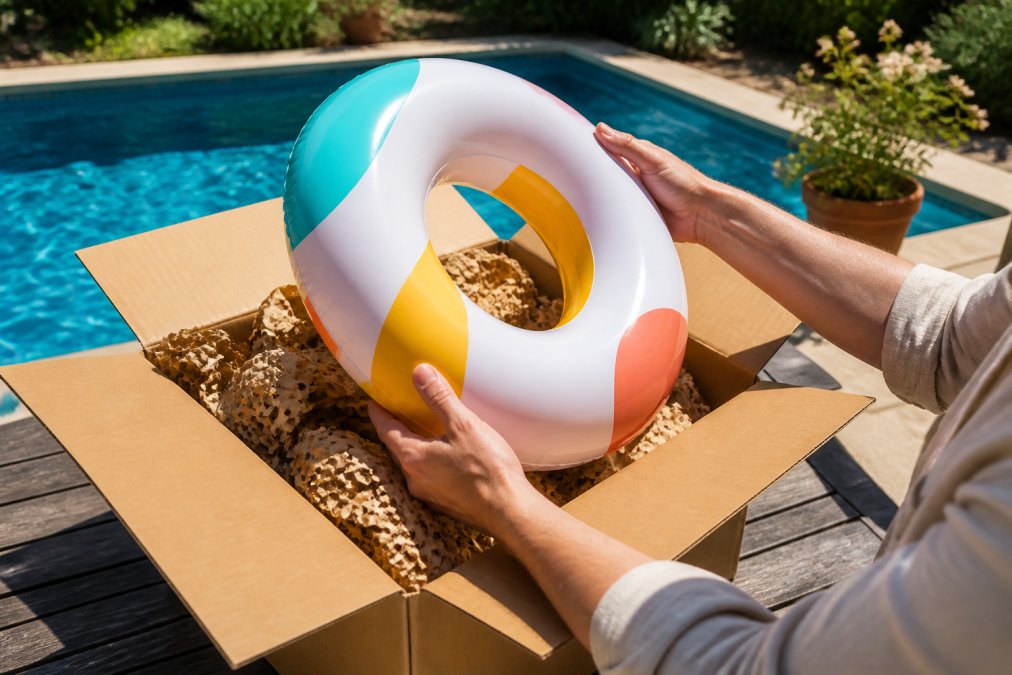
At RippleWave, we've analyzed how packaging choices affect both playtime and the planet. The most meaningful eco friendly pool toy packaging benefits come from post-consumer materials and biodegradable options that break down naturally. Fully recyclable and biodegradable shipping boxes, like the signature ones we use, represent a shift away from single-use plastics toward a circular economy where materials stay in use longer.
Key markers of genuinely sustainable packaging include:
- FSC certification for paper and cardboard sourcing
- BPA-free and phthalate-free inks and dyes
- Recyclable materials that don't require special facilities
- Plastic-free alternatives like molded paper pulp or cornstarch foam
The Real Environmental Impact of Plastic Toy Packaging
The conventional approach to toy packaging creates a hidden burden. Traditional polyethylene foam and shrink-wrap contribute to packaging waste that persists for centuries, and the environmental impact extends far beyond what ends up in your recycling bin.
When you order inflatables online, the packaging often outweighs the product's environmental footprint. Virgin plastic production consumes fossil resources, while chemical leaching from discarded packaging can affect soil and water systems. Many families don't realize that their pool toy's packaging may carry a heavier carbon footprint than the toy itself, especially when shipped across borders.
The landfill waste reduction potential here is substantial. By choosing brands that prioritize sustainable sourcing and inert materials, families directly reduce demand for virgin plastics. The resource conservation argument is simple: every box made from recycled content means fewer trees cut and less oil refined. This aligns with broader environmental stewardship goals that eco-conscious consumers increasingly expect from the brands they support.
Benefits of Plastic-Free Toy Packaging for Your Family
Choosing plastic-free packaging delivers advantages you can see and feel. The eco friendly pool toy packaging benefits extend to your family's health, your home's clutter level, and your disposal routine.
Safety First: BPA-Free and Non-Toxic Materials
Non-toxic materials matter when little hands tear into boxes. Standard packaging can contain toxic additives and dyes that raise questions about water safety and material safety data. Packaging that is BPA-free and phthalate-free eliminates concerns about chemical leaching during handling or accidental contact with pool water.
Less Clutter, More Play: Easier Disposal for Parents
Biodegradable packaging solves the "what do we do with this?" problem. Green packaging made from paper or plant fibers goes straight into compost or recycling, unlike bulky foam inserts that require special drop-off. This means less time managing waste and more time actually swimming.
How Long Do Biodegradable Pool Toys Last?
Many parents wonder how long do biodegradable pool toys last compared to conventional ones. The answer depends on the material and how the toy is stored, not on the packaging. However, the unique chemistry of pool water, specifically chlorine and salt, plays a far larger role in degradation than most general toy guides acknowledge.
The Chlorine Factor
Chlorine is an oxidizer. It attacks the polymer chains in both natural and synthetic rubbers, accelerating the breakdown that manufacturers design for. This means a biodegradable toy left floating in a chlorinated pool for a week will age faster than the same toy used for an hour and then dried in the shade. The degradation is not just surface-level; it weakens the material at a molecular level, leading to micro-cracks that eventually cause leaks.
For natural rubber (latex), the mechanism is ozone and UV degradation, which chlorine exposure accelerates. For plant-based plastics like PLA or PHA, the issue is different: these materials are designed to hydrolyze (break down in the presence of moisture and heat). A warm, chlorinated pool provides both, so the toy's lifespan is directly tied to how long it stays in the water.
A Pool-Specific Lifespan Guide
The following estimates assume the toy is used in a residential pool with standard chlorine levels (1-3 ppm) and is removed, rinsed with fresh water, and dried after each use. This is the critical difference from general toy lifespans: rinsing removes the chlorine residue that would otherwise continue degrading the material.
| Material | In-Water Time (per use) | Typical Lifespan (with rinsing) | Typical Lifespan (no rinsing) | End of Life |
|---|---|---|---|---|
| Natural rubber | 1-2 hours | 1-2 seasons | 1 season or less | Home compostable |
| Plant-based plastic (PLA) | 1-2 hours | 2 seasons | 1 season | Industrial compost only |
| Recycled PVC (conventional) | 1-2 hours | 3-5 seasons | 3-5 seasons | Recyclable where accepted |
The Trade-Off: Durability vs. Degradability
A common mistake is assuming "biodegradable" means "disposable." These toys are durable design products meant to serve many play sessions. The biodegradability refers to end-of-life breakdown, not fragility during use. Sustainable manufacturing processes can produce toys that withstand vigorous family play while still returning to the earth eventually.
However, the trade-off is real. A natural rubber toy will never last as long as a PVC toy in a chlorinated pool. The parent's choice is between a toy that lasts longer but sits in a landfill for centuries, or a toy that lasts a shorter time but returns to the earth. The key is to match the toy's lifespan to your family's actual usage pattern. If you only swim a few weekends a summer, a biodegradable toy will last several seasons. If you have a daily pool routine, you may need to replace it annually, which is still a better environmental trade-off than a PVC toy that never breaks down.
Storage: The Second Lifespan Lever
Beyond rinsing, storage is the other major control. Heat and UV light are the primary accelerants for biodegradable materials. Store toys in a cool, dark place, a shed or a garage is better than a poolside deck box. Folding or compressing a natural rubber toy can also create stress points where cracks form. Inflate to full pressure for storage, or deflate completely and store flat without creases.
By understanding these pool-specific mechanisms, parents can make informed choices rather than guessing. The question is not just "how long will it last" but "how long will it last given how we actually use our pool."
Spotting Greenwashing: A Checklist for Eco Conscious Parents
Not every brand claiming sustainability delivers on it. Greenwashing is the practice of marketing products as eco-friendly without meaningful action behind the claims. For eco conscious consumerism, learning to spot it is essential. Here's a practical checklist for evaluating any brand's packaging promises:
- Does the packaging carry a third-party certification like FSC or a compostability standard?
- Does the brand specify what "biodegradable" means and under what conditions?
- Is the packaging actually recyclable in standard municipal streams, or only in special facilities?
- Does the brand discuss its product lifecycle and overall environmental impact, or only the box?
- Are sustainable manufacturing claims backed by specific details about materials and processes?
A Parent's Guide to Disposing of Pool Toy Packaging
Proper disposal completes the eco friendly pool toy packaging benefits cycle. But the reality is that pool toy packaging is rarely a single material. Most inflatables arrive in a cardboard box that contains a plastic blister pack or a polybag, and each component requires a different disposal path. Here is a practical, component-by-component guide that goes beyond the generic "recycle it" advice.
The Cardboard Box: Check for Coatings
Most shipping boxes are corrugated cardboard, which is curbside recyclable. However, many pool toy boxes have a glossy coating or a plastic window. A glossy coating is usually fine, it burns off during the recycling process. A plastic window is not. Remove the plastic window before recycling the box. Also, remove all tape and labels. A box with tape is still recyclable, but a box with a plastic window will contaminate the paper stream.
The Blister Pack: The Most Common Problem
Blister packs, the rigid plastic shell with a cardboard backing, are the most problematic packaging type. The cardboard backing is recyclable, but the plastic shell is usually PET or PVC. Here is the key: separate the two materials. The cardboard goes in the paper bin. The plastic shell goes in the plastic bin only if it is marked with a recycling symbol. If it is not marked, it is likely PVC, which is not curbside recyclable in most municipalities. In that case, it goes to landfill.
The Polybag: Soft Plastic Drop-Off
The thin plastic bag that wraps the deflated toy is soft plastic (typically LDPE, code 4). This is not curbside recyclable in most single-stream systems because it jams sorting machinery. However, most large grocery stores and retail chains have soft plastic drop-off bins. Clean and dry the bag, then drop it off. Do not put it in your curbside bin.
Biodegradable Foam Alternatives: The Industrial Compost Catch
Some premium brands now use molded paper pulp or cornstarch foam instead of polystyrene. Molded paper pulp is compostable at home, tear it up and add it to your compost bin. Cornstarch foam (often labeled as PLA) is technically compostable, but only in industrial facilities that reach temperatures above 55°C (PubMed). Home compost bins rarely reach this temperature, so the material will not break down effectively. Check if your municipality has an industrial composting facility that accepts this material.
The "Wish-Cycling" Problem
"Wish-cycling", putting items in the recycling bin hoping they are recyclable, is a major problem. A single non-recyclable item can contaminate an entire batch of recyclables, sending it to landfill. When in doubt, throw it out. It is better to send one item to landfill than to contaminate a whole truckload of otherwise recyclable material.
A Quick Disposal Decision Tree
- Is it cardboard? Remove tape, labels, and plastic windows. Flatten and recycle curbside.
- Is it rigid plastic? Check the recycling code. Codes 1 (PET) and 2 (HDPE) are widely recyclable. Code 3 (PVC) and 6 (PS) are not. Separate from any cardboard backing.
- Is it soft plastic? Do not put in curbside. Take to a store drop-off.
- Is it paper pulp? Tear up and compost at home.
- Is it cornstarch foam? Check for industrial composting facilities in your area. If none, landfill.
- Is it mixed materials? Separate everything. If you cannot separate, the item goes to landfill.
Waste management practices vary by municipality, so a quick check of local rules prevents "wish-cycling" that contaminates recycling streams. This disposal guide for parents also applies to the toy itself at end of life, closing the loop on responsible consumption.
Choose Brands That Prioritize the Planet
When you select pool toys, the packaging tells you a lot about the company behind the product. Brands investing in ozone-friendly materials, recycled content, and transparent sustainable sourcing tend to make better products overall. The eco friendly pool toy packaging benefits signal a commitment that often extends to durable design and safer materials throughout the product line.
RippleWave embodies this approach. As an authorized retailer, we ship every order in fully recyclable and biodegradable signature shipping boxes, ensuring no EU import duties surprise you at delivery. Our commitment to plastic-free alternatives in packaging pairs with durable, family-friendly inflatable designs built to last multiple summers. We focus on water safety and non-toxic materials because we believe premium pool fun shouldn't cost the earth.
Conclusion
The shift toward sustainable packaging isn't just a trend; it's a responsibility that brands and families share. From reducing carbon footprint through recyclable materials to protecting children from toxic additives, the eco friendly pool toy packaging benefits touch health, convenience, and the environment. The challenge lies in choosing products where the values match the marketing.
RippleWave makes that choice simple with recyclable and biodegradable shipping, fast tracked delivery, and durable toys designed for family fun. Get started with RippleWave and enjoy pool season knowing your purchase reflects care for both your family and the planet.
Frequently Asked Questions
Are biodegradable shipping boxes as durable as plastic ones?
Yes. Modern biodegradable and recyclable boxes are designed to protect items during transit just as effectively as plastic alternatives. They are made from sturdy materials like corrugated cardboard that withstand normal shipping pressures. RippleWave uses fully recyclable and biodegradable signature shipping boxes, ensuring your pool toys arrive in perfect condition without the long-term environmental cost of plastic packaging.
How can parents identify truly eco-friendly toy packaging?
Look for clear certifications and specific claims. Check for FSC certification on cardboard, which ensures sustainable sourcing. Avoid vague terms like 'green' or 'earth-friendly' without details. Instead, seek specific statements such as '100% recyclable' or 'plastic-free'. Examine the packaging for a recycling symbol and check if it is made from post-consumer materials. A simple greenwashing checklist helps you confirm the packaging is genuinely eco friendly, not just marketed that way.
Why is eco-friendly packaging important for the toy industry?
The toy industry has traditionally relied heavily on plastic packaging, contributing to landfill waste and environmental pollution. Eco-friendly packaging addresses this by using recyclable, biodegradable, or post-consumer materials that reduce carbon footprint and resource consumption. For pool toys specifically, choosing brands that use sustainable packaging helps decrease the amount of plastic entering waterways and oceans, protecting the environment for future generations.
What are the benefits of choosing brands with recyclable packaging?
Choosing brands with recyclable packaging supports a circular economy, where materials are reused rather than discarded. This reduces landfill waste, lowers the demand for virgin plastic production, and conserves natural resources. For parents, it also models responsible environmental stewardship for children. Brands like RippleWave that prioritize fully recyclable boxes make it easy for families to dispose of packaging correctly and reduce their household's environmental impact.


