


Table of Contents
- Biodegradable vs Recyclable Pool Toy Packaging: What the Labels Actually Mean
- The Environmental Cost of Traditional Pool Toy Materials
- Benefits of Biodegradable Shipping Materials for Pool Toys
- How to Recycle Plastic Toy Packaging the Right Way
- Certifications That Verify Eco-Friendly Packaging Claims
- Eco-Friendly Pool Toy Brands and What to Look For in Retailers
- Biodegradable Pool Toy Packaging: Is the Premium Worth It?
- Conclusion
Last Updated: August 27, 2026
Biodegradable vs Recyclable Pool Toy Packaging: What the Labels Actually Mean
"Biodegradable" and "recyclable" are not interchangeable, and choosing between them requires understanding what each term actually delivers in practice.
Biodegradable packaging breaks down through biological processes over time, anywhere from months to centuries depending on the material and conditions. Recyclable packaging can be collected, reprocessed, and turned into new products. Neither automatically makes a product better for the planet.
The Biodegradable Myth: Compostable Is Not the Same Thing
Most people assume biodegradable means the packaging disappears cleanly into the earth. That assumption is the core of the problem.
Compostable packaging breaks down completely into non-toxic components under controlled composting conditions, typically within 90 to 180 days. Standard biodegradable plastics may only fragment into smaller synthetic polymer pieces rather than truly degrading. These microplastics persist in soil and waterways and are increasingly linked to ecosystem damage, as documented in European Environment Agency guidance on microplastics.
A pool toy box labelled "biodegradable" that ends up in a general waste bin will most likely sit in a landfill for decades. The claim is technically accurate but practically meaningless without the right disposal conditions.
Why Recyclability Often Wins in Practice
Recyclability is a more honest claim in most household waste scenarios because the infrastructure to support it already exists. Cardboard, paper, and certain plastic resin types are actively collected and processed through municipal waste systems.
Packaging marked with resin code 1 (PET) or 2 (HDPE) has strong recyclability in most waste streams. Codes 3 through 7 are far less consistently accepted. Pool toy packaging often combines materials, which complicates sorting and reduces real-world recyclability.
Circular economy thinking pushes toward designing packaging that stays in the material loop rather than exiting it. Recyclable cardboard boxes do exactly that.
The Environmental Cost of Traditional Pool Toy Materials
Traditional pool toy materials carry a significant environmental footprint long before packaging enters the conversation. Pool toys are typically made from polyvinyl chloride, a synthetic polymer requiring substantial energy input and producing chlorine-based chemical byproducts that raise concerns under Finnish Environment Institute SYKE guidance on chemical hazards.
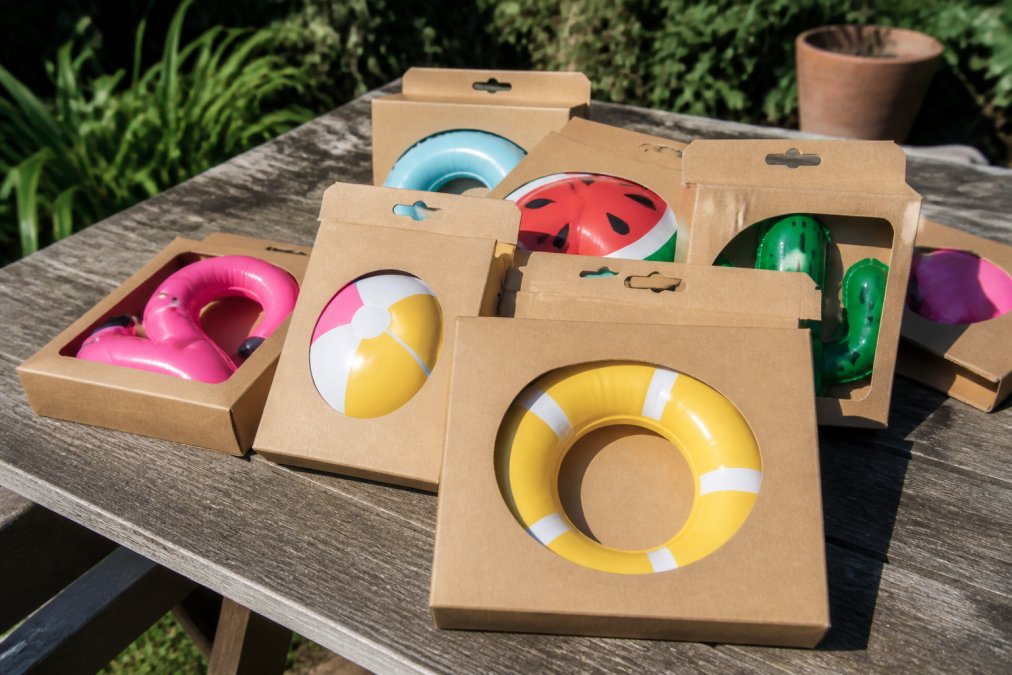
Many traditional packages combine a cardboard outer sleeve with a PVC or shrink-wrap plastic window panel. That combination is almost impossible to recycle because the materials must be separated before processing. Most consumers and waste facilities do not separate them.
PVC and Vinyl: The Problem with Polyvinyl Chloride
PVC is the dominant material in inflatable pool toys because it is cheap, flexible, and waterproof. Its environmental profile is considerably less convenient.
Producing PVC generates vinyl chloride monomer, a substance classified as a human carcinogen. Additives like phthalate plasticisers, used to keep PVC flexible, have been subject to increasing regulatory scrutiny across the EU under the REACH regulation.
At the end of its useful life, PVC is notoriously difficult to recycle. Most recycling facilities do not accept it. It cannot be composted. Incineration releases hydrogen chloride gas and dioxins. The material lifecycle of a standard PVC pool toy ends almost exclusively in landfill or incineration.
Material Durability vs Sustainability: A Real Trade-Off
Durability and eco-friendliness are sometimes in direct tension. A pool toy made from thicker, higher-grade PVC will last three or four summers. A toy made from thinner material might last one season. The environmental arithmetic strongly favours the durable option, even if its material is technically less "green." Fewer toys purchased means less material consumed, less packaging waste, and fewer carbon emissions from manufacturing and shipping.
Benefits of Biodegradable Shipping Materials for Pool Toys
Biodegradable shipping materials offer genuine advantages when they are the right material in the right context. Paper-based void fill, cornstarch packing peanuts, and mushroom-based packaging all break down in home composting conditions without leaving synthetic polymer residues.
The carbon footprint benefit is real but modest. Paper-based alternatives are heavier than plastic equivalents, which increases shipping weight and associated emissions. The net environmental benefit depends heavily on the specific material, shipping distance, and end-of-life disposal route available to the customer.
Retailers using genuinely biodegradable shipping materials should specify exactly what those materials are and under what conditions they degrade. Vague claims about "eco-friendly packaging" without material specification are a greenwashing red flag.
RippleWave uses fully recyclable and biodegradable signature shipping boxes, which can be processed through standard cardboard recycling streams or composted without leaving synthetic residues.
How to Recycle Plastic Toy Packaging the Right Way
Recycling plastic toy packaging correctly requires separating mixed materials. If a pool toy package has a cardboard sleeve and a clear plastic window, those need to come apart before either can be recycled. The cardboard goes with paper and cardboard. The plastic window is almost certainly non-recyclable in household waste streams unless it carries a resin code 1 or 2 marking.
Identifying the Resin Code and Sorting Correctly
Every plastic packaging component should carry a resin identification code, typically a number from 1 to 7 inside a triangle of arrows.
- Code 1 (PET): Widely accepted. Clear plastic bottles and some packaging films.
- Code 2 (HDPE): Widely accepted. Rigid plastic containers, some bags.
- Code 3 (PVC): Rarely accepted. Pool toy material itself often falls here.
- Code 4 (LDPE): Accepted at some facilities, not all. Soft plastic bags and films.
- Code 5 (PP): Increasingly accepted. Rigid containers, bottle caps.
- Code 6 (PS): Rarely accepted. Polystyrene foam, some rigid packaging.
- Code 7 (Other): Catch-all category. Recyclability varies widely.
For local sorting guidance, the Finnish Packaging Recycling RINKI service provides specific drop-off point information and accepted material lists by region.
Certifications That Verify Eco-Friendly Packaging Claims
Certifications exist because "eco-friendly" has become meaningless without verification. The certifications worth looking for on pool toy packaging include:
- FSC certification: Confirms that paper and cardboard components come from responsibly managed forests.
- EN 13432: The European standard for compostable packaging, tested to confirm breakdown under industrial composting conditions within defined timeframes.
- Seedling logo: The consumer-facing mark associated with EN 13432 compliance, indicating industrial compostability.
- Blue Angel (Blauer Engel): A German environmental label with strong recognition across EU markets.
Greenwashing Red Flags to Watch For
The most common greenwashing pattern is vague, unqualified environmental language. Phrases like "made with nature in mind," "eco-conscious design," or "planet-friendly materials" carry no regulatory weight.
Specific red flags include: "biodegradable" claims without specifying material or conditions; recycling symbols on non-recyclable materials; unverified carbon-neutral claims; "plastic-free packaging" on products containing plastic; and sustainability claims without supporting detail.
If a retailer cannot answer basic questions about what their packaging is made from and how it should be disposed of, the eco-friendly branding is marketing, not material science.
Eco-Friendly Pool Toy Brands and What to Look For in Retailers
Most of the sustainability conversation focuses on packaging rather than the toys themselves. That is partly because changing packaging is faster and cheaper than reformulating PVC products.
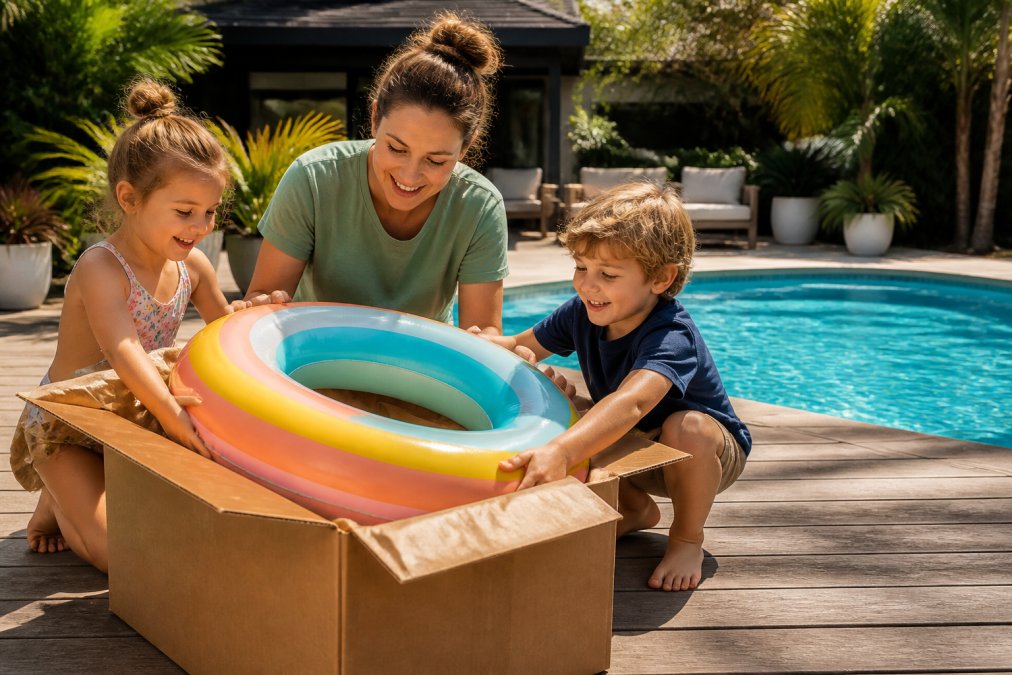
When evaluating retailers for genuine environmental commitment, the checklist includes: packaging specificity; certification visibility; material transparency about toys themselves, including plasticiser types; sustainable sourcing information; and end-of-life guidance.
RippleWave uses fully recyclable and biodegradable signature shipping boxes and ships without EU import duties, which removes friction for customers evaluating true purchase cost. Fast delivery with tracking also reduces the environmental impact of failed deliveries and reshipments, a significant but rarely discussed source of e-commerce carbon emissions.
The End-of-Life Reality: What Happens After the Summer
A standard PVC inflatable pool toy has no meaningful end-of-life pathway. It cannot be recycled through household streams, composted, or biodegrade in any practical timeframe. When it deflates beyond repair, it goes to general waste and from there to landfill or incineration.
The most environmentally responsible approach is: buy durable products designed to last multiple seasons; repair small punctures promptly; store toys correctly between seasons; donate functional toys rather than binning them; and check whether local waste facilities accept PVC for specialist recycling.
Biodegradable Pool Toy Packaging: Is the Premium Worth It?
Biodegradable pool toy packaging is genuinely better for the environment than conventional plastic packaging, but only under specific conditions: the material must actually biodegrade under accessible conditions, the customer must dispose of it correctly, and the claim must be backed by verifiable certification.
The value of eco-friendly packaging depends on three factors:
| Factor | What to Check | Why It Matters |
|---|---|---|
| Material specificity | Is the exact material named? | Determines real-world disposal options |
| Certification | FSC, EN 13432, or equivalent? | Confirms claim is independently verified |
| Disposal accessibility | Home compostable or industrial only? | Decides whether the benefit is achievable |
Where all three factors align, the premium is justified. Where they do not, you are paying for a label rather than an outcome.
The broader case for choosing retailers with genuine packaging commitments is about signalling to the market that eco-conscious consumerism is a purchasing factor, which creates commercial pressure for sustainable manufacturing practices across the supply chain.
For pool toys specifically, the packaging is a small part of the lifecycle impact. The bigger decisions are material durability, product lifespan, and end-of-life options. Get those right, and the packaging choice becomes a meaningful but secondary consideration.
Buying pool toys with genuine environmental credentials means looking past the front-of-pack claims and asking harder questions about materials, certifications, and what happens when the season ends. RippleWave's fully recyclable and biodegradable signature shipping boxes, combined with fast tracked delivery that reduces failed-delivery emissions, represent a practical commitment to responsible consumption. Browse the RippleWave collection and get started with pool toys built for multiple summers of family fun.
Frequently Asked Questions
Are biodegradable plastics actually compostable at home?
Most biodegradable plastics are not suitable for home composting. They require industrial composting facilities that maintain specific temperature and humidity conditions to break down properly. Without those conditions, biodegradable plastic behaves much like conventional plastic in a landfill, degrading very slowly. Always check the packaging for a certified compostable label and verify whether your local waste management facility accepts that material stream before assuming it will decompose.
What should I look for to verify eco-friendly packaging claims?
Look for third-party certifications rather than self-declared claims. FSC certification on cardboard confirms responsibly sourced fibre. The EN 13432 standard verifies industrial compostability. Resin identification codes on plastic help you sort correctly for recycling. Vague terms like 'eco-conscious' or 'green packaging' without supporting certification are common greenwashing signals. Retailers that publish a product stewardship or environmental impact statement give you more transparency than those that only use marketing language on the box.
How does the Finnish waste management system handle biodegradable plastics?
Finland's waste management infrastructure, guided by the Waste Act (646/2011) and the national waste plan, separates biowaste from plastics. Certified industrially compostable packaging can go into biowaste only if your municipality explicitly accepts it, many do not. Standard biodegradable plastics that lack EN 13432 certification must go into mixed waste or plastic recycling depending on the resin type. When in doubt, check your municipality's sorting guide, as rules vary between regions.
Is recyclable shipping packaging genuinely better than biodegradable for pool toys?
For most consumers, recyclable packaging is the more practical choice. Cardboard shipping boxes with FSC certification can be recycled through established collection systems without needing industrial composting infrastructure. Biodegradable pool toy packaging only delivers its environmental benefit if it reaches the right facility. Recyclable materials also support a circular economy by re-entering the supply chain as raw material, reducing the carbon footprint of new production rather than simply breaking down at end of life.
This article was written using GrandRanker


