


Table of Contents
- What Makes Biodegradable Pool Toys Different
- How Long Do Biodegradable Pool Toys Last
- Non-Toxic Pool Toy Materials Explained
- Best Eco-Friendly Pool Toys for Kids
- Cost-Benefit Analysis: Is the Premium Worth Paying
- The Real Environmental Impact
- Common Misconceptions About Biodegradable Pool Toys
- Conclusion: Making the Right Choice for Your Family
- Frequently Asked Questions
Last Updated: August 30, 2026
What Makes Biodegradable Pool Toys Different
Biodegradable pool toys use materials designed to break down naturally at end-of-life, unlike conventional inflatable toys made from PVC and synthetic polymers. Traditional pool toys rely on PVC and phthalates, chemical plasticizers that persist in the environment for decades and leach harmful chemicals into water. Biodegradable alternatives typically use natural rubber, plant-based polymers, or recycled materials that don't leach toxins and eventually degrade without fragmenting into microplastics.
RippleWave carries eco-friendly pool toys designed with this principle in mind. What separates a truly biodegradable toy from one simply "marketed as eco-friendly" is certification and material transparency. A legitimate biodegradable pool toy clearly states its materials, meets recognized standards for non-toxicity, and provides disposal instructions. Many products labeled "eco-friendly" are simply less toxic versions of conventional toys and don't actually biodegrade.
How Long Do Biodegradable Pool Toys Last
Most biodegradable pool toys last one to three seasons of regular use before showing significant wear, roughly 180 to 270 days of cumulative pool exposure.
Durability in Chlorinated Water
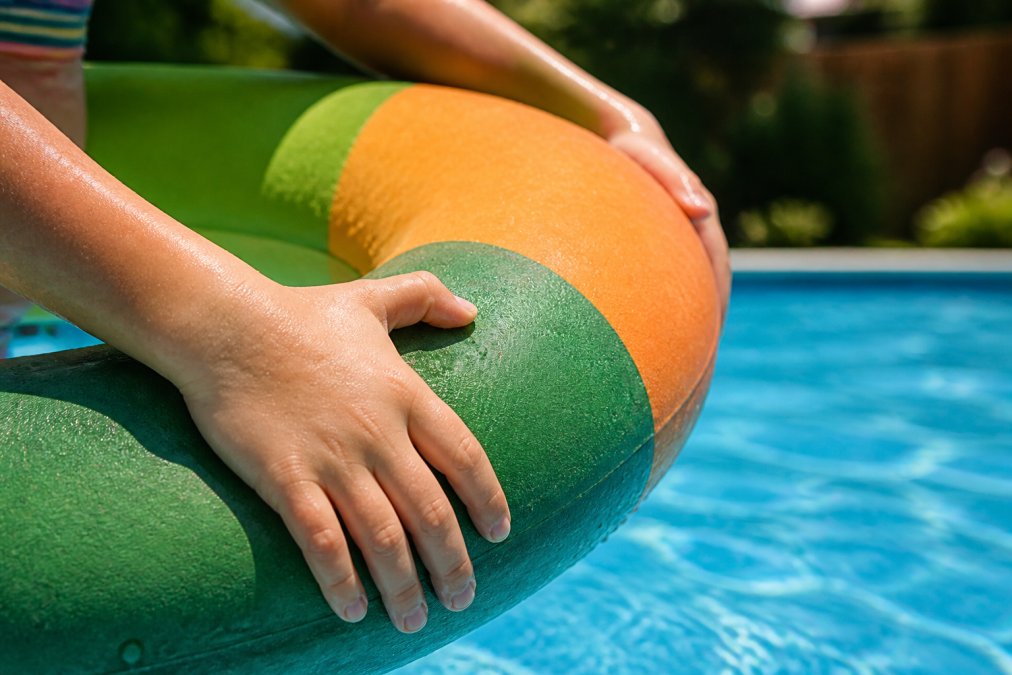
Chlorine accelerates breakdown in some biodegradable materials. Natural rubber toys hold up reasonably well in standard residential pool chlorine levels (1-3 ppm) but degrade faster than PVC equivalents. Durability depends heavily on storage and maintenance: toys stored in shade and rinsed with fresh water after each session last significantly longer than those left in direct sunlight or wet on pool deck.
Real-world testing shows high-quality natural rubber toys maintain 80% of their original buoyancy through one full summer season. By season two, you'll notice softening and minor surface degradation. By season three, most toys show visible wear that makes them unsafe for young children.
Real-World Performance Expectations
Biodegradable pool toys won't perform identically to PVC equivalents. Natural rubber floats feel slightly different, less rigid, with more give under pressure. For children, this is usually not a problem. Durability also varies by toy type: simple floats outlast complex designs with multiple seams or inflatable chambers.
The real question isn't whether biodegradable toys last as long as PVC toys, they don't. It's whether the shorter lifespan is acceptable given the environmental benefit. For families rotating toys seasonally anyway, the difference becomes negligible.
Non-Toxic Pool Toy Materials Explained
Natural Rubber and Plant-Based Alternatives
Natural rubber comes from rubber trees and contains no synthetic additives or phthalates (peer-reviewed research). It's inherently biodegradable, breaking down through microbial action and UV exposure over 5-10 years in natural conditions. Natural rubber toys are hypoallergenic and don't leach chemicals into pool water, though they cost more to source and are slightly less durable in harsh chlorine than PVC. Product safety and material composition are overseen by authorities such as Tukes (Finnish Safety and Chemicals Agency) in Finland.
Plant-based polymers derive from renewable sources like corn starch or cellulose. They biodegrade faster than natural rubber in industrial composting (60-180 days) but are generally less durable in water (peer-reviewed research). Recycled materials represent a third category: technically not biodegradable, but they reduce demand for virgin plastic and divert waste from landfills. A recycled plastic toy lasting five years offsets more environmental damage than a biodegradable toy lasting one year.
What to Avoid: PVC, Phthalates, and Synthetic Polymers
PVC requires phthalates to achieve flexibility, and those chemicals leach into pool water and marine ecosystems. Children exposed to phthalates face potential endocrine disruption. PVC persists in the environment for 500+ years.
Synthetic polymers like polyethylene and polypropylene don't require phthalates but still persist for centuries and fragment into microplastics. A polyethylene pool toy breaking into thousands of microplastic particles over 10 years is a slower version of the same pollution problem.
Non-toxic doesn't automatically mean biodegradable, and biodegradable doesn't automatically mean safe. Read material specifications carefully. Look for third-party certifications such as ISO 14855 (biodegradability standards) or other recognized compostability standards.
Best Eco-Friendly Pool Toys for Kids
Age-Appropriate Options
For ages 0-3, focus on simple, solid toys without small parts. Natural rubber squeaky toys and simple floats work well. Avoid toys with complex seams or inflatable sections.
For ages 4-8, biodegradable pool noodles and simple floats become viable. Eco-friendly pool rings and diving toys encourage active play at this age.
For ages 9+, biodegradable options expand to include competitive toys like pool basketball hoops with natural rubber frames. Older kids play harder, so durability becomes critical. A durable recycled plastic toy often outperforms a short-lived biodegradable alternative.
Balancing Safety Certifications with Sustainability
Every pool toy should meet basic safety standards. In Europe, toys must comply with CE marking and EN 71 standards. Biodegradable toys should meet the same standards as conventional toys. Don't compromise safety for environmental benefit.
Look for toys carrying both safety certifications and environmental certifications. A toy certified for non-toxicity (no phthalates, no heavy metals) and biodegradability (ISO 14855 or similar) is your safest bet.
Cost-Benefit Analysis: Is the Premium Worth Paying
A conventional PVC pool float costs roughly 15-25 euros. A comparable biodegradable natural rubber float costs 25-40 euros, a 60-170% premium. Over one season, that feels significant. Over three seasons, the math changes.
If you replace toys annually, the per-season cost difference shrinks. A toy bought for 30 euros and used one season costs 30 euros per season. A biodegradable toy bought for 30 euros lasting two seasons costs 15 euros per season, competitive with conventional options.
The real cost advantage emerges if you rotate toys between siblings or keep them for multiple children. Track how long your family typically keeps pool toys. If you're replacing them every season anyway, biodegradable options cost roughly the same per season while delivering environmental benefit. If you expect toys to last 4-5 years, conventional toys win on cost.
A conventional PVC toy lasting five years but persisting in the environment for 500 years carries environmental cost not reflected in purchase price. A biodegradable toy lasting two years but breaking down in 5-10 years has lower total environmental impact, even with higher replacement frequency. If you buy four conventional toys over 20 years, you've created four items persisting for 500+ years. If you buy ten biodegradable toys over the same period, you've created ten items biodegrading within 10 years.
The Real Environmental Impact
Microplastics and Marine Pollution
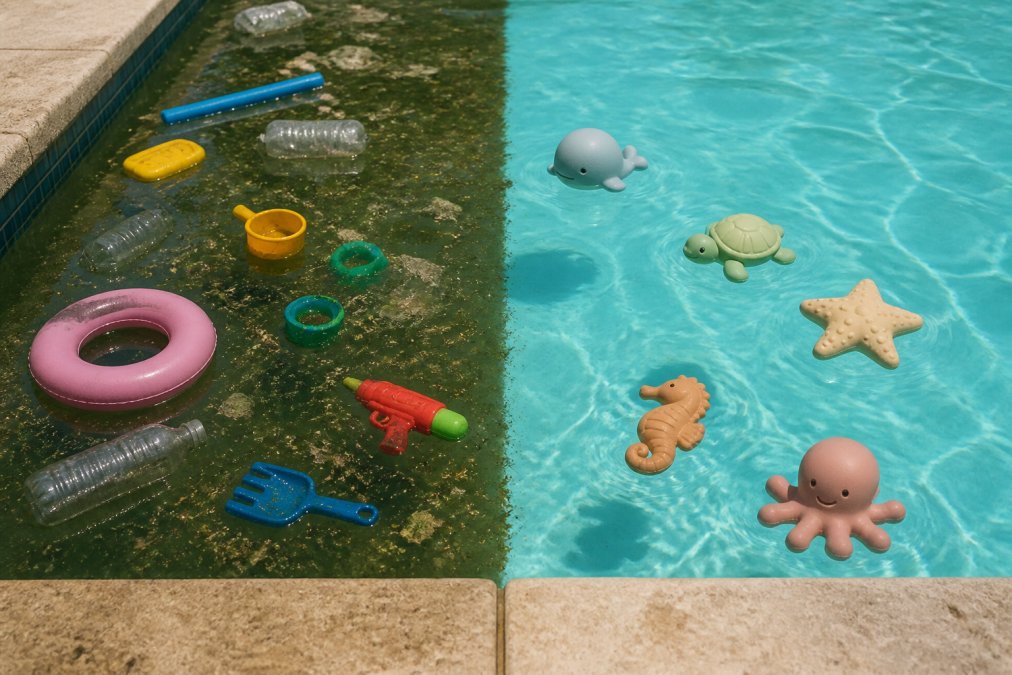
Conventional pool toys contribute to marine microplastic pollution by fragmenting into microplastics when they degrade and by leaching chemical additives (phthalates, BPA, heavy metals). A single PVC pool toy can fragment into millions of microplastic particles. These particles enter water systems through storm drains and wastewater treatment, accumulating in fish tissues and moving up the food chain to humans.
Biodegradable toys reduce the duration and scale of this problem. A natural rubber toy degrading in 5-10 years creates fewer persistent microplastics than a PVC toy persisting for 500 years. Natural rubber and plant-based toys don't contain phthalates, so they don't leach endocrine disruptors into pool water.
End-of-Life Disposal and Biodegradation
A toy labeled "biodegradable" won't degrade in a landfill, landfills are anaerobic environments where decomposition is extremely slow. Industrial composting facilities can break down certified biodegradable toys in 60-180 days. Home composting takes longer, typically 1-2 years, if the toy is certified for home compost. Check the label.
Proper composting or incineration with energy recovery is preferable to natural disposal. RippleWave's guidance is clear: compost certified biodegradable toys if possible, recycle conventional toys through appropriate programs, and never dispose of any pool toy in natural waterways.
Common Misconceptions About Biodegradable Pool Toys
Misconception 1: Biodegradable means it will decompose in your backyard. False. Most require industrial composting or several years of soil exposure. Leaving a toy in your yard expecting it to disappear is unrealistic.
Misconception 2: Biodegradable toys are always safer for kids. Not necessarily. Check for safety certifications, not just biodegradability claims.
Misconception 3: Biodegradable toys last as long as conventional toys. False. Plan for 1-3 seasons compared to 3-5 for quality conventional toys. This is a trade-off, not a failure.
Misconception 4: All eco-friendly claims are equally valid. False. Look for specific certifications and material transparency, not marketing adjectives.
Misconception 5: Buying biodegradable toys solves plastic pollution. Partial truth. They reduce your personal impact and support sustainable materials demand but don't solve systemic pollution.
Conclusion: Making the Right Choice for Your Family
Biodegradable pool toys are worth it if your family replaces toys regularly anyway, cares about chemical safety, and will properly dispose of old toys through composting or recycling. They're not worth it if you expect toys to last 5+ years or won't manage end-of-life disposal responsibly.
RippleWave makes this choice easier by offering certified eco-friendly pool toys alongside conventional options. You can compare durability, safety certifications, and environmental impact directly. Start with one biodegradable toy and assess durability in your specific pool conditions. If it meets your family's needs, expand your collection. If durability falls short, conventional toys remain valid.
The real question isn't whether biodegradable pool toys are perfect, they're not. It's whether they're better than the alternative for your family's situation. For environmentally conscious families planning regular toy replacement, they are. RippleWave helps you make that choice with transparent product information, certified materials, and reliable delivery that respects both your family's needs and your environmental values.
Frequently Asked Questions
Q: Are biodegradable pool toys actually durable enough for daily use?
A: Yes, quality biodegradable pool toys designed with natural rubber or plant-based materials hold up well to daily chlorinated water exposure. The key difference from standard PVC toys is that they resist UV damage and chemical leaching rather than breaking down quickly. Most last multiple seasons when stored properly out of direct sunlight between uses. However, durability depends on material quality and manufacturing standards, so purchasing from reputable makers ensures you get toys built to last, not just marketed as eco-friendly.
Q: What materials are used in eco-friendly pool toys, and are they safe for kids?
A: The best eco-friendly pool toys use natural rubber, bamboo fiber, recycled materials, and plant-based polymers. These materials are non-toxic and hypoallergenic, avoiding harmful phthalates and PVC that can leach chemicals into pool water. Look for toys certified to safety standards, which verify buoyancy, material integrity, and absence of toxic additives. Natural rubber in particular is inherently non-porous, preventing bacterial growth and reducing water contamination compared to synthetic alternatives.
Q: How do biodegradable pool toys impact the environment compared to PVC?
A: Traditional PVC pool toys contribute to microplastics pollution and marine pollution when they degrade, releasing synthetic polymers into water systems. Biodegradable alternatives break down naturally without toxic residue, supporting circular economy principles. Over time, replacing PVC toys repeatedly creates far more plastic waste than investing in durable biodegradable options. Additionally, eco-friendly toys typically have lower carbon footprints during manufacturing and use recyclable or compostable packaging, reducing overall environmental impact.
Q: Do I need to dispose of biodegradable pool toys differently than regular ones?
A: Biodegradable pool toys can be composted or disposed of in standard waste streams where they will break down naturally without harming ecosystems. Some materials like bamboo fiber are fully compostable in home compost systems. In contrast, PVC toys should be kept out of landfills and waterways due to toxic leaching risk. Always check the manufacturer's end-of-life disposal instructions, as some toys may have mixed materials requiring specific handling. Proper disposal of old toys prevents microplastics from entering water systems.
This article was written using GrandRanker


